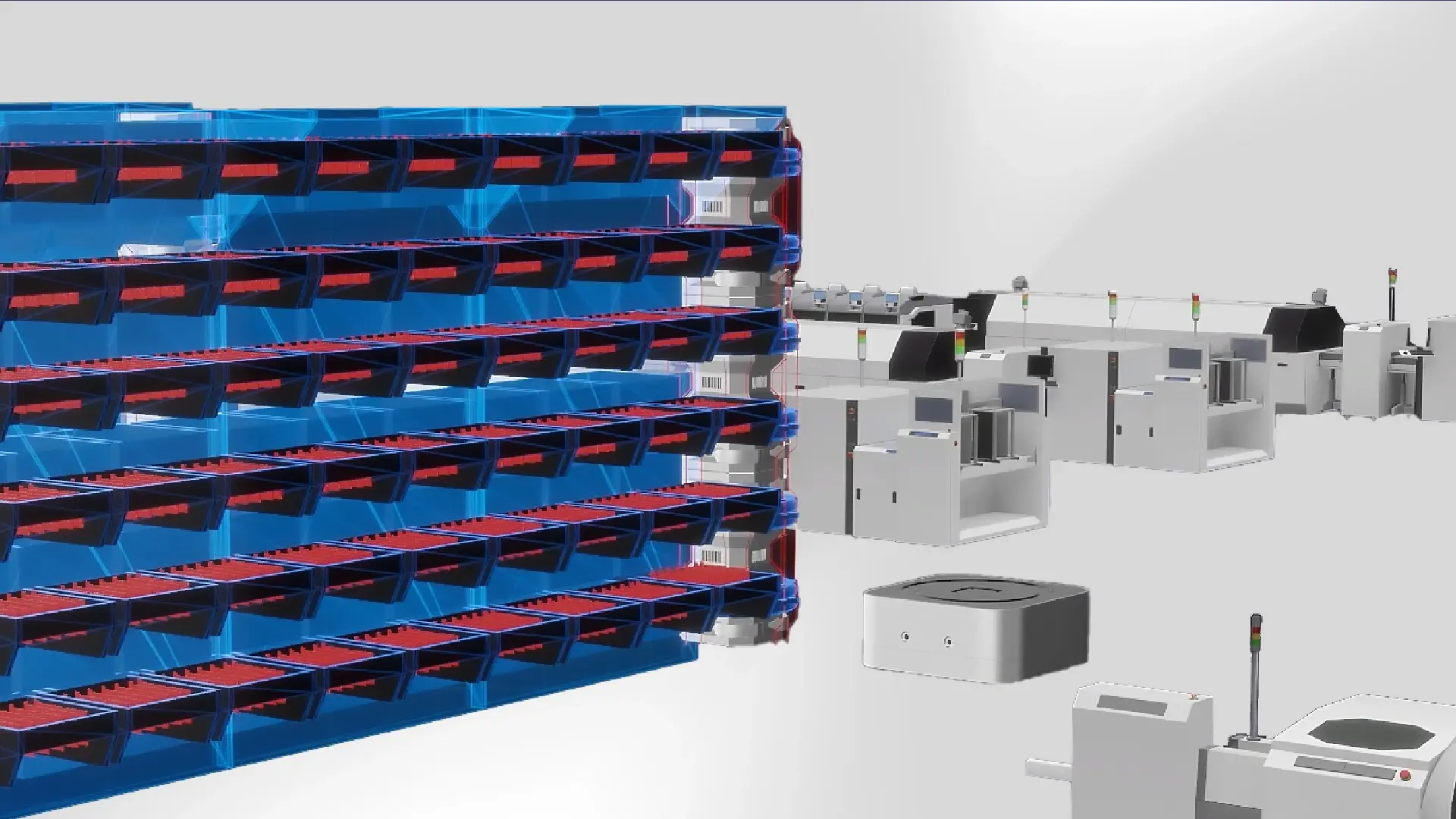
SMT supervisors and production planners need to understand what is running, which lines are available, where queues are developing, and whether equipment conditions may affect the schedule.
When this information must be collected from separate machine interfaces, spreadsheets, or verbal updates, teams may act on an incomplete view of production.
This Work Smarter video shows how LineWorks MES, a modular MES solution from camLine, provides a centralized view of SMT production. It connects current production and equipment information to support planning, line utilization, and operational decisions.
Why SMT Production Planning Requires a Line-Level View
Individual equipment interfaces can show what is happening at a specific machine, but planners and supervisors must coordinate production across several connected stations and lines.
They need to know whether a line is currently producing, preparing for a changeover, waiting for work, affected by an alarm, or approaching completion of the current order.
A shared line-level view reduces the need to assemble this information manually and gives operational teams a more consistent basis for planning the next action.
How LineWorks MES Creates SMT Line Transparency
LineWorks MES consolidates supported production and equipment information into configurable operational views.
Table 1. Five Areas of Visibility for SMT Production Decisions
| Visibility area |
Decision it supports |
| Production status |
Shows the current order, lot, and production progress across the line. |
| Line availability |
Helps planners identify which line is available or approaching completion of its current work. |
| Queues and process flow |
Makes waiting production and developing bottlenecks visible. |
| Changeover status |
Shows whether preparation for the next product or order is progressing. |
| Equipment conditions and alarms |
Highlights machine conditions that may require operational attention. |
Give Each Role the Production Information It Needs
Operators, engineers, supervisors, planners, and plant managers do not require the same level of detail.
Configurable LineWorks MES dashboards can emphasize the production status, alarms, queues, and trends relevant to each role while retaining a common operational context.
This helps teams coordinate production using the same current information, from detailed line monitoring to higher-level planning and resource allocation.
Explore LineWorks Suite
FAQ
Q: Why is transparent visibility important across multiple SMT production lines?
A: Transparent visibility helps planners and supervisors understand what each line is running, how production is progressing, which lines may become available next, and where changing conditions could affect the schedule. Without this shared context, teams may rely on separate machine interfaces, manual reports, or outdated status information.
Q: How does LineWorks MES support transparent SMT production and changeover planning?
A: LineWorks MES provides real-time visibility into production status, line availability, queues, changeovers, and relevant equipment conditions. Planners and supervisors can use this information to assess upcoming line availability and determine whether downtime, congestion, or a delayed changeover requires the production sequence to be reviewed.
Q: How do configurable dashboards support different SMT production roles?
A: Configurable dashboards organize production information according to the responsibilities of each role. Supervisors can focus on current execution and conditions requiring attention, planners on availability and queues, engineers on relevant equipment details, and plant managers on production across multiple lines.
Q: What should manufacturers validate before relying on real-time SMT production visibility?
A: Manufacturers should confirm that the displayed information represents actual production and equipment conditions accurately and within the required timeframe. Validation should cover line-state mapping, lot and production-order updates, queues, changeovers, equipment alarms, update latency, communication loss, conflicting source data, user access, and recovery following an interface interruption.
Users should also be able to distinguish current information from data that is missing, delayed, or no longer valid.