Demand Management
Turn historical data and market signals into forecasts you can actually use to plan.
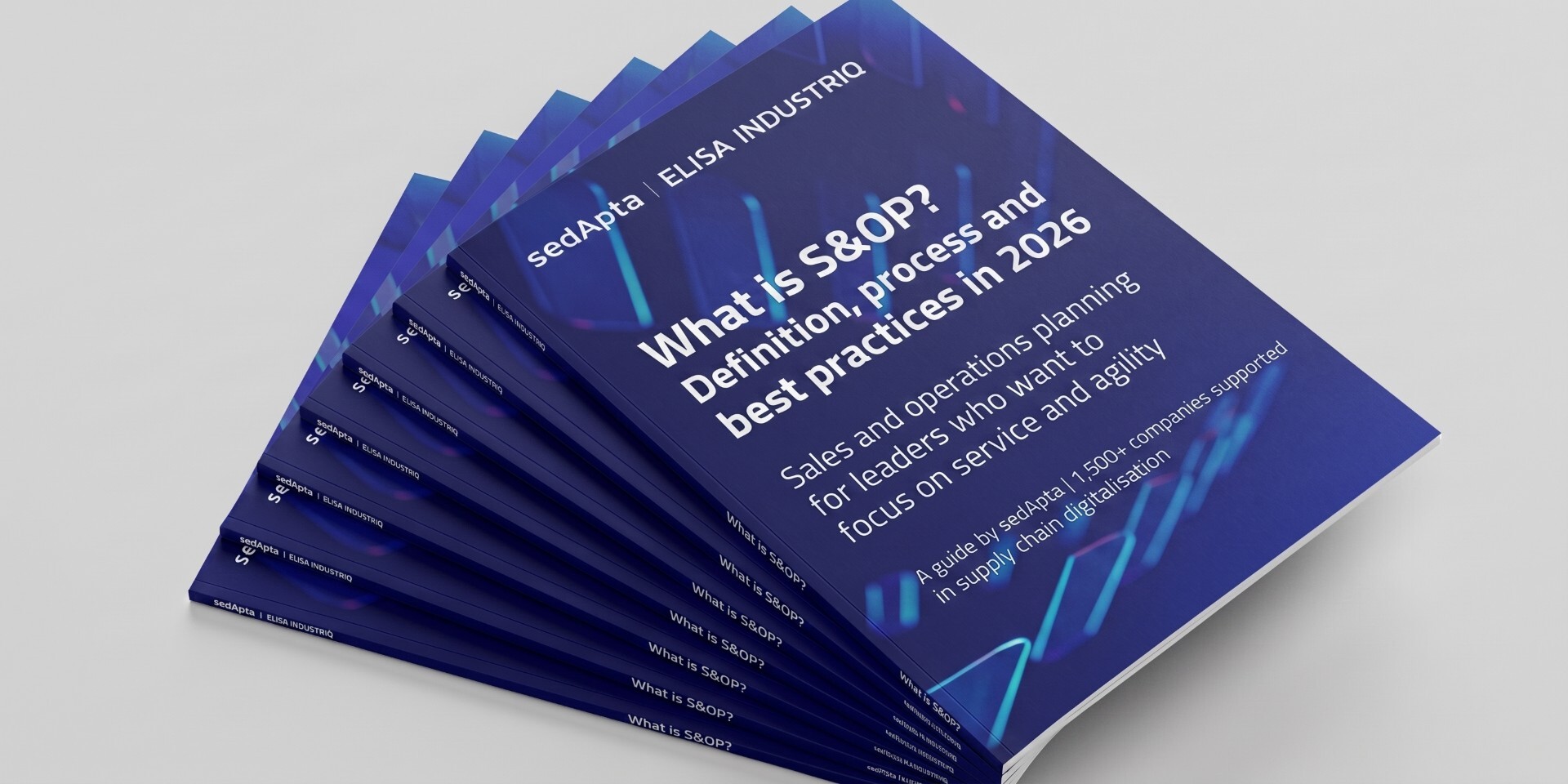
Your sales team commits to delivery dates that production can't meet. Finance is working from numbers that change every week. And inventory keeps growing to cover the uncertainty. S&OP is the process that fixes this - but only when it's truly shared across functions.
Aligning sales forecasts, production capacity, and financial resources sounds straightforward. In practice, it's one of the most difficult processes to run consistently — and one of the most consequential when it breaks down.
Without a structured S&OP, business functions operate on different levels: sales promise delivery dates that production cannot meet, inventory swells to cover uncertainty, and finance chases numbers that change every week. The result is reactive planning, not strategic planning.
With the right structure in place, you break down those silos. Bring together demand, supply, and finance to develop a single, regularly updated plan on which the entire organization can base its decisions.
Each module targets a specific planning challenge. Start with what's most critical, then expand when you're ready.
Turn historical data and market signals into forecasts you can actually use to plan.
Track actual demand in near real time and reduce the gap between forecasts and actual results.
Keep your inventory at the right level: not too much to account for uncertainty, nor too little to risk disruptions.
Build realistic plans based on actual capacity, not theoretical capacity.
Confirm realistic delivery dates, based on actual availability and capacity.
Involve suppliers in the planning process and minimize surprises early on.
Coordinate distribution flows between plants and warehouses to meet demand without excess inventory.
Place buffers where they're really needed and plan based on actual demand, not on forecasts.
Align operations and finance to maximize the value generated by the supply chain, planning based on actual capacity and demand rather than static assumptions.
Sales and Operations Planning (S&OP) is the process manufacturers use to align supply with demand - connecting production capacity, inventory targets, and sales forecasts into a single operating plan.
In practice, S&OP means bringing sales and operations together around a shared plan - one that reflects what the market needs and what production can realistically deliver. Within this framework, production is organized around real capacity constraints - not theoretical targets.
The core objective: balance what the market demands with what the company can supply.
S&OP processes are, by their very nature, closely linked to corporate and commercial policies; therefore, each company follows a different model and uses different methodologies to address this issue, one of which is sales planning.
Yes - when implemented at the right level, S&OP is a strategic management process. Executive teams use it to stay focused, aligned, and synchronized across every function of the organization. This cross-functional alignment is what transforms S&OP from a planning exercise into a genuine strategic tool.
A well-run S&OP cycle keeps the following plans synchronized and current:
The frequency of planning and the planning horizon depend on the specific context. Short product lifecycles and high demand volatility require a tighter S&OP than products with steady consumption. When implemented correctly, the S&OP process also enables effective supply chain management.
Most S&OP cycles run on a monthly cadence and follow a consistent sequence - even if the names vary by company:
Analyze, forecast, and shape demand. This step brings in all demand signals and turns them into an actionable plan
Identify what you need, when you need it, and set procurement timelines so materials are ready when production requires them
Assess capacity against demand and schedule work to keep production flowing. A clearly defined production process is what separates a reliable plan from a reactive one
Determine how much to ship to each distribution center or warehouse so you can meet customer demand without overloading inventory
Assess your financial position and build a plan that ties operational decisions directly to business targets.
S&OP is closely linked to—and often a component of—integrated business planning, a more comprehensive and long-term planning process that brings together the plans of each department and links them to the company's financial performance and strategy
S&OP is a process before it's a technology - but the right software makes it work at scale. It automates the data-heavy steps, keeps collaboration between sales, finance, and operations structured, and gives you the simulations you need to make fast, confident decisions.
Through the sedApta Suite, we give manufacturers a fully integrated planning environment - built on a proven methodology and designed to work together from day one. Because every component of the sedApta Suite is modular, you can start where it matters most and expand as your operations grow - with full interoperability across functions, roles, and workflows built in from the start.
Many of our customers started with a single critical area - demand management or production planning — and expanded from there as results came in. We'll show you how it applies to your specific situation.