Artificial Intelligence and Machine Learning

 AI and Machine Learning for adaptive planning, more accurate forecasts, and automation of repetitive tasks. 

AI & ML

Constant fluctuations in demand require companies to be able to respond quickly; whether these fluctuations stem from new business opportunities, inventory optimization, or changing customer needs, the goal is to respond swiftly while minimizing the impact on production costs.  Operating within an extended, digital supply chain enables full visibility into all the parties involved in the process. For sedApta, this is just part of the solution.

Results that make planning smarter


Artificial Intelligence and machine learning make planning faster, more accurate, and more flexible, improving forecasts and reducing manual work through advanced data analysis.

Greater forecast accuracy

The integration of artificial intelligence and machine learning enables the analysis of large amounts of historical and real-time data to accurately predict future scenarios. This results in more reliable forecasts than traditional methods, reducing errors and discrepancies in production and demand plans.
Adaptive planning

Smart solutions do more than just generate static forecasts; they continuously adapt plans to changing operational and market conditions. In practice, the system can automatically recalculate scenarios and recommendations based on new data, enabling faster and more responsive decisions in dynamic environments.

More accurate forecasts

Thanks to advanced machine learning models and “what-if” simulations, forecasts are not only more accurate but also better tailored to different possible scenarios. This allows you to evaluate alternatives, anticipate potential issues, and optimize resources and inventory with greater confidence.

Reduction in manual labor

Intelligent automation eliminates many repetitive and labor-intensive tasks, freeing up time for people to focus on strategic analysis and high-value decisions. AI analyzes complex data, suggests actions, and reduces the need for manual intervention in day-to-day planning.

sedApta_AI

Today, thanks to a strategic partnership with Elisa IndustrIQ, a leading company in the fields of Artificial Intelligence and machine learning algorithms, sedApta is able to help industry leaders identify, predict, and prevent process inefficiencies by transforming data into actionable insights.

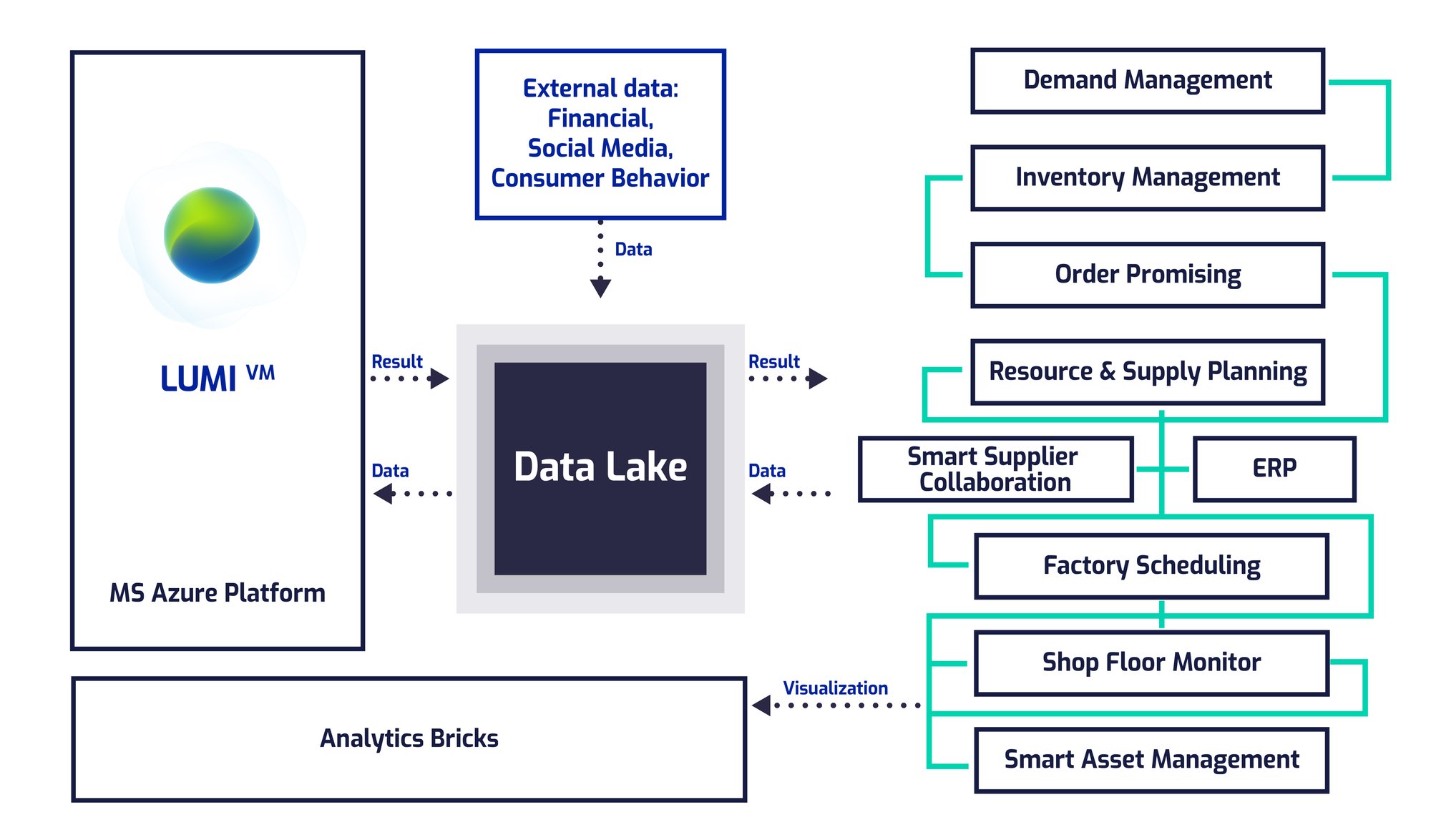
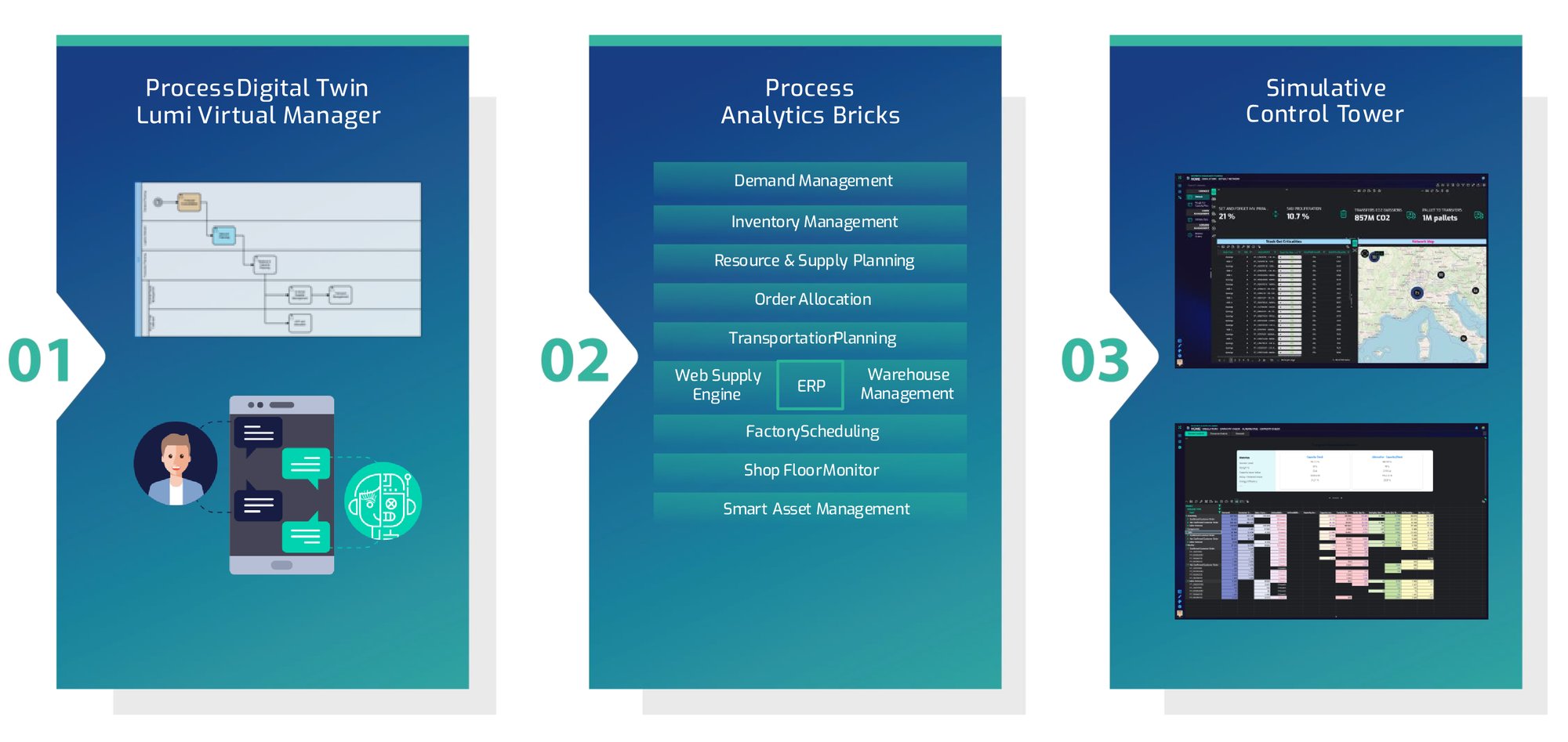
sedApta’s orchestrated processes are enhanced by the introduction of a new digital professional role: LUMI Virtual Manager. By leveraging machine learning algorithms and a set of predefined KPIs, this system is capable of independently analyzing and interpreting the available data, rapidly evaluating all possible scenarios, identifying the solutions with the lowest impact from among the various alternatives, and providing the other stakeholders in the process with a subset of carefully selected scenarios.

Demand Driven approach

Digital twins, orchestrated processes, Analytics Bricks, and the Simulation Control Tower are the core components of the sedApta platform that enable the synchronization and coordination of all process stakeholders, providing them with exactly the information they need, at the right time, to efficiently carry out a specific process activity.

Discover more


FAQ


  • Artificial intelligence applied to the supply chain and planning uses AI and Machine Learning algorithms to analyze large volumes of historical and real-time data, anticipate demand and issues, and recommend the best actions. sedApta uses it to make planning more adaptive and forecasts more accurate, and to automate repetitive tasks. The goal is to respond quickly to demand swings, new business opportunities or new customer needs with the lowest possible impact on production costs.

  • Traditional methods rely mostly on historical data. AI and Machine Learning algorithms analyze historical, seasonal, market and real-time data together and recognize relationships a classic statistical model misses. Forecasts become more reliable, with fewer errors and deviations in demand and production plans. The models also update with new data and improve with use.

  • Adaptive planning is a way of planning in which the plan is updated continuously as operational and market conditions change, instead of waiting for the next cycle. When new data arrives, the system automatically recalculates scenarios and recommendations, so your plan always reflects the real situation and you can decide faster.

  • Predictive analytics answers the question "what will happen?": it anticipates demand, requirements and supply issues by analyzing historical, seasonal and market variables in real time. Prescriptive recommendations answer the question "what should we do?": they don't just flag the problem, they suggest the most effective action and estimate its expected impact. In the sedApta Suite the two work in sequence, from forecast to decision.

  • Pattern recognition finds recurring behaviors in production and demand data that conventional analysis misses, even at high volumes. Anomaly detection compares real data with expected models and flags significant deviations. Because you get the alert while the deviation is still local, you can act before it spreads through the supply chain and turns into delays or stockouts.

  • Self-learning models are Machine Learning models that update automatically with new data and improve with use. No, they don't need periodic manual recalibration: learning is continuous, so the models adapt to seasonality, new products and market changes without data science intervention.

  • Intelligent automation removes many repetitive tasks from day-to-day planning, such as collecting and checking data or recalculating plans. AI interprets complex data, suggests actions and reduces manual intervention. Planners get more time for strategic analysis and for the decisions that need their experience.

  • Together these elements form the core of the sedApta platform. The orchestrated process defines who does what and when. The Digital Twin replicates flows to simulate scenarios. The Simulative Control Tower provides the overall view and compares what-if scenarios. LUMI Virtual Manager, a digital professional role built into orchestrated processes, uses ML algorithms and a set of predefined KPIs to analyze data, work out possible scenarios, identify those with the lowest impact and propose them to the people involved. The result is that every stakeholder is in sync and gets the right information at the right time.

  • sedApta's AI is built natively into the sedApta Suite; it is not an external add-on. It works inside the suite, linking demand planning, scheduling and MES on the same real planning and execution data, without creating new information silos.

  • Elisa Industriq brings its expertise in artificial intelligence and Machine Learning algorithms to sedApta's solutions. The collaboration aims to help industrial companies identify, predict and prevent process inefficiencies, turning data into insights they can act on.

Related products


How sedApta's AI and ML Turn Data into Decisions

  • Predictive analytics: Anticipate demand, requirements, and supply chain issues by analyzing historical, seasonal, and market variables in real time.
  • Prescriptive recommendations: The system does more than just flag a problem; it recommends the most effective action to take, along with an estimate of the expected impact.
  • Pattern recognition: Identifies recurring patterns in production and demand data that traditional analysis misses, even with large volumes.
  • Anomaly detection: Detects significant deviations from expected models and brings them to attention before they propagate throughout the supply chain.
  • Self-learning models: automatically update themselves with new data. The more they are used, the more accurate they become: no periodic manual calibration required.
  • Cross-module integration: The AI operates natively within the sedApta suite, connecting demand planning, scheduling, and MES without information silos.

About O.S.A.

The digital backbone of sedApta Suite for an open platform

sedApta’s O.S.A. suite is an ecosystem that provides users with new “capabilities” to support Supply Chain Management and Change Management processes, enabling collaborative management of demand planning, inventory, delivery, and production processes. At the same time, it ensures complete transparency regarding all activities and actions at every level.