Simulative Control Tower

sedApta's Simulative Control Tower is the decision-making layer that connects planning and execution in real time.

Simulative Control Tower

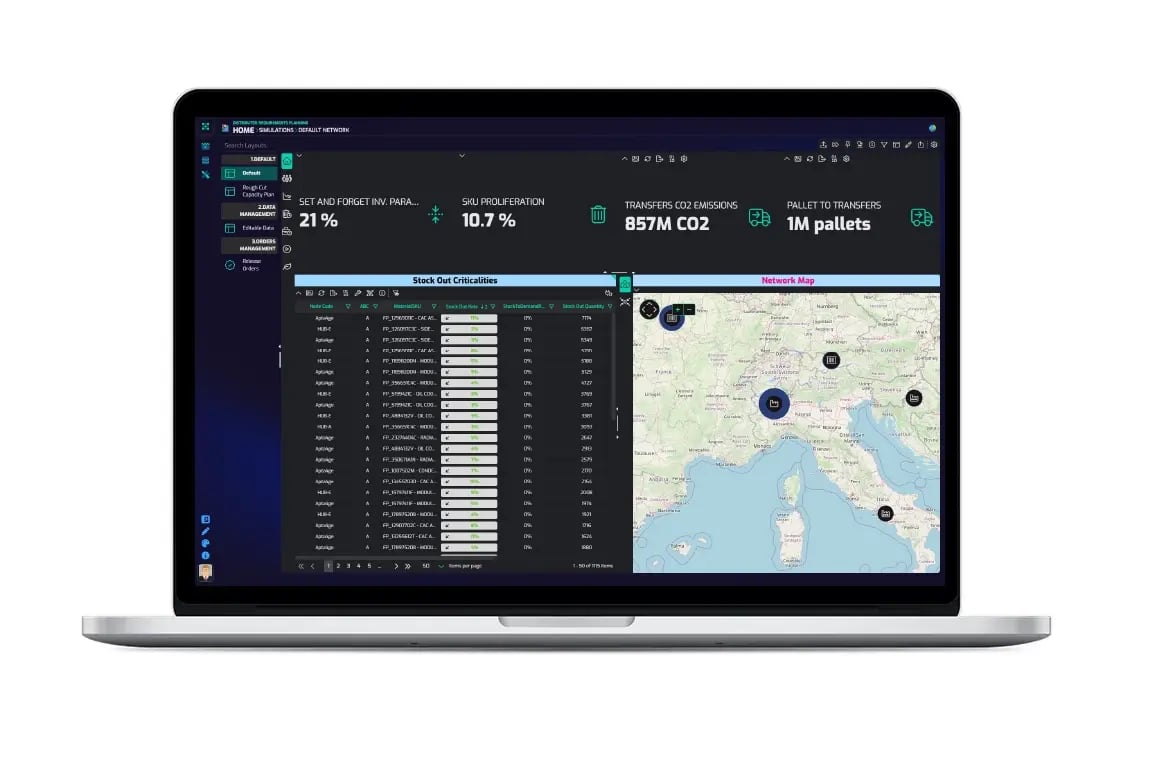
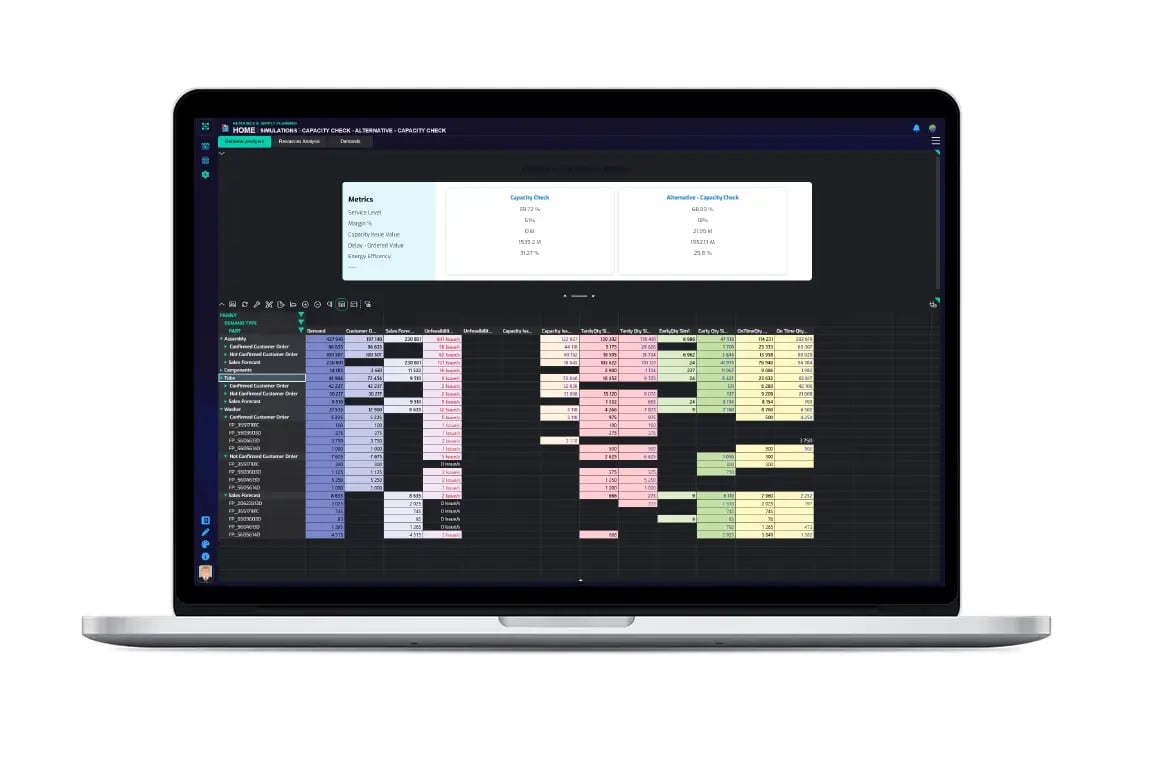
The Simulative Control Tower is an essential tool for improving visibility and responsiveness in the supply chain. Through a virtuous cycle, the tool enhances overall visibility across the entire process. Thanks to its simulation-based approach, it enables the comparison of various possible scenarios, analyzing and quantifying their resulting impacts, thereby facilitating effective and rapid decision support (simulation and response).

Together with the now well-established concept of process orchestration, sedApta’s Simulative Control Tower enables structured process collaboration among people, activities, and tools across the entire supply chain in real time (supply chain control tower), including collaboration with suppliers, outsourced manufacturers, and customers, supported by contextual information and online discussions.

What changes when planning and execution are on the same page


Anyone who manages a complex supply chain knows that the problem is never a lack of data. It’s about not having the right insight at the right time to act before an exception turns into a problem.

sedApta’s Simulative Control Tower connects planning and execution within a single decision-making layer, with scenario simulation integrated into the daily workflow.

Faster decisions, even under pressure

When an exception occurs, you don't have to spend hours gathering data from different systems. The Control Tower simulates scenarios in real time and presents you with options that have already been evaluated for their impact. Make an informed decision, not one based on instinct.

Fewer interruptions, because you see them coming

Machine learning algorithms detect early warning signs before they become critical issues. You have time to coordinate with the supplier, reallocate capacity, or adjust the plan, without having to scramble to deal with an emergency.

End-to-end visibility, all in one place

From the request to factory execution, everything comes together in a single, cohesive view. No more manual reconciliations between S&OP, S&OE, and MOM. The key performance indicators that matter are visible in real time at every level of the organization.

Teams aligned, without alignment meetings

Suppliers, planners, plant managers, and senior management all work with the same contextual information at the same time. Decisions are made where they're needed, with the transparency that was previously lacking.

How the decision-making layer works

The Simulative Control Tower is not a monitoring dashboard. It is an active layer that processes, simulates, and suggests, integrating sedApta's calculation engines with the data already stored in your systems. These are the features that set it apart from a simple aggregated view.

  • Predictive Alerts: Alerts generated before a critical issue arises. The system continuously monitors key supply chain metrics and notifies users only of issues that require immediate attention, providing the necessary context to understand their impact.

  • Scenario Simulation: What-if analysis integrated into the decision-making process. You can compare multiple scenarios side by side, with impacts already quantified in terms of service levels, inventory, and revenue, without leaving the platform.

  • Prescriptive Recommendations: Not just alerts, but actionable insights. The system evaluates the available options and suggests the solution that best balances cost, time, and impact on the plan.

  • Collaborative Workflow: Structured decision-making processes across functions, roles, and systems. Every action is tracked, assigned, and confirmed within the platform, with shared visibility across planning, operations, and management.

  • Unified Data Model: A single data model that integrates S&OP, S&OE, and MOM. No more parallel versions of the plan, no more manual reconciliations. The information is consistent across the board, in real time.

  • Continuous Learning: Machine learning algorithms update themselves over time based on feedback and historical data. The quality of the simulations and recommendations improves with use, adapting to the specific characteristics of your production environment.

Measurable impact, not empty promises

The benefits of the Simulative Control Tower translate into concrete metrics, as demonstrated in real-world implementations within complex manufacturing environments. These are the results that planning and operations teams begin to see within the first few weeks of use.


−20% operational lead time

Less time between the detection of an exception and the operational response. Integrated simulation eliminates manual analysis steps and speeds up the decision-making process.

+30% Faster decision-making

Decisions that previously required hours of data collection and cross-system comparisons are now supported in real time, with scenarios that have already been assessed for their impact.

−25% Inventory levels

Consistent visibility across demand, planning, and execution reduces excessive safety stock and buffers built up to compensate for information uncertainty.

+15% Service Level

Fewer unplanned outages, more orders delivered on time. Preventing critical issues directly translates into reliability for the end customer.


The sedApta approach enables the synchronization and coordination of all stakeholders in the process, delivering the right information at the right time to the right role to efficiently execute a specific process activity while simultaneously aligning planning (S&OP), scheduling (S&OE) and execution (MoM).

The Simulative Control Tower, along with the typical features of the orchestration process, is further enhanced by Machine Learning and Artificial Intelligence algorithms.

Thanks to innovative technology, combined with in-depth knowledge of supply chain processes, sedApta’s Simulative Control Tower enables you to:
  • Provide complete visibility into all supply chain processes tailored to specific KPIs
  • Develop what-if scenarios using a simulation-based approach
  • Create in-depth analysis with specific alerts on critical issues
  • Quantify the impacts of potential solutions
  • Take a collaborative approach to solutions and action planning
Cards

Comprehensive Visibility

Thanks to innovative technology, combined with in-depth expertise, the Simulative Control Tower provides comprehensive visibility into the state of the supply chain, enabling users to view high-level KPIs and drill down into them for further details. With over 140 metrics available, based on the time horizon and project scope, and the ability to break down the business process into four levels (financial, S&OP, S&OE, MOM), sedApta’s Simulative Control Tower enables you to:

MONTHLY CYCLE

SALES & OPERATIONS - PLANNING

  • 3 months to 2 years
  • Alignment of profit and loss targets (P&L)
  • Supply and demand alignment

WEEKLY CYCLE

SALES&OPERATION - EXECUTION

From 0 to 3 months
Planning of distribution needs
Production planning and scheduling

REAL-TIME EXECUTION

OPERATIONAL EXCELLENCE

From 0 to 2 weeks
Setting short-term priorities
Analysis of "as built" vs. "as planned"

arrow-2

FINANCIAL IMPACT ANALYSIS

ANALYSIS OF THE IMPACT ON ECONOMIC VALUE
PERFORMANCE MONITORING
COMPROMISE DECISION
4P APPROACH: PRODUCT-PRICE-PROMOTION-PLACE

Simulation-Based Approach

Depending on the overall results of the planning processes, and any critical issues or opportunities identified, the solution allows you to activate processes and/or calculation and simulation engines (both sedApta and third-party), providing a holistic view of the scenarios.

In fact, from the Control Tower, you can go directly to the planning scenarios, make decisions, implement them, and follow up on them.


AI/ML

SPECIFIC MACHINE LEARNING ALGORITHMS & ARTIFICIAL INTELLIGENCE

demand
DEMAND MANAGEMENT
Collaborative mathematical forecasting

inventory
INVENTORY MANAGEMENT
Distribution Center Management
MRP Make
MRP Buy

planning
PLANNING & SCHEDULING
Size of the production system
Decision to make or buy
Production plan and finished capacity
Verification of production constraints
Check material availability

order
ORDER CONFIRMED
Stock Allocation
Order Management

CONTROLTOWER

Alerts from In-Depth Analyses

sedApta’s Simulative Control Tower helps identify critical issues by drawing management’s attention to what is out of the ordinary

CONTROLTOWER-1

Quantifying the impacts

The analysis of the impacts of disruptions can be conducted across several areas: service level, revenue, inventory buildup, and delayed orders

Confirmation of solutions and actions

Final approval allows the identified plan to be implemented through processes, resources, and business functions.

Would you like more information?

Discover more


FAQ


  • sedApta's Simulative Control Tower is the decision-making layer that links supply chain planning and execution. It works on a simulate-and-respond cycle: when an exception emerges, it compares alternative scenarios, quantifies their impact and presents the best options so you can decide quickly. The problem it solves is not a lack of data, but having the right view at the right moment, so you can act before an exception turns into damage.

  • A traditional control tower is mainly a dashboard: it aggregates data and shows what is happening. The Simulative Control Tower is an active layer: as well as showing the situation, it processes data, simulates alternative scenarios and suggests what to do. It integrates with sedApta's calculation engines and with the data already in your systems, and from the control tower you go straight into planning scenarios to decide and execute.

  • Based on planning results and the issues or opportunities that emerge, the Simulative Control Tower triggers processes and calculation and simulation engines, from sedApta or third parties, and gives you an overall view of the scenarios. With Scenario Simulation you compare several what-if scenarios side by side, with quantified impacts on service level, inventory and revenue, without leaving the control tower. The simulation links to Demand Management, Inventory Management, Planning & Scheduling and Order Promising.

  • Predictive Alerts are notifications generated by continuous monitoring of key supply chain variables. Machine Learning algorithms pick up weak signals, small deviations that point to a coming problem, before they become critical. You are only alerted to what really needs attention, with the context to assess its impact, and you have time to act on suppliers, capacity or the plan.

  • The Simulative Control Tower quantifies the impact of a disruption on four dimensions: service level, revenue, inventory build-up and delayed orders. Having these figures for every scenario lets you compare alternatives on concrete terms and choose the one with the best balance for the business.

  • Prescriptive Recommendations evaluate the available options and suggest the one with the best balance of cost, time and impact on the plan. The choice stays with you: once you have identified the solution, you confirm it and the Simulative Control Tower puts it into practice through processes, resources and business functions. With the Collaborative Workflow, every action is assigned, tracked and confirmed in the same solution.

  • The Simulative Control Tower provides over 140 metrics, organized by time horizon and project scope, across four levels: financial, S&OP, S&OE and MOM. The monthly S&OP cycle covers 3 months to 2 years (P&L targets and supply-demand alignment). The weekly S&OE cycle covers 0 to 3 months (distribution requirements, production planning and scheduling). Real-time execution, or Operational Excellence, covers 0 to 2 weeks (short-term priorities and as-built vs. as-planned analysis). The financial level assesses the impact on economic value, including through the 4P approach.

  • The Unified Data Model is a single data model shared by S&OP, S&OE and MOM. Every function works from the same consistent, real-time information, so there are no parallel versions of the plan to reconcile by hand. From demand to shop-floor execution, everything comes together in one view, with KPIs readable at every level.

  • The Simulative Control Tower enables structured, real-time collaboration between people, activities and tools across the supply chain, involving suppliers, outsourced manufacturers and customers with contextual information and online discussion. Planners, plant managers and leadership work from the same information at the same time, and with the Collaborative Workflow every decision is assigned, tracked and confirmed across functions, roles and systems.

  • In real-world implementations in complex manufacturing environments, sedApta has measured these results: 20% shorter operational lead time, 30% faster decision-making, 25% lower inventory levels and a 15% higher service level. Teams see results within the first few weeks of use, thanks to decisions backed by pre-assessed scenarios and fewer unmanaged disruptions.

Related products