Self-Adapting
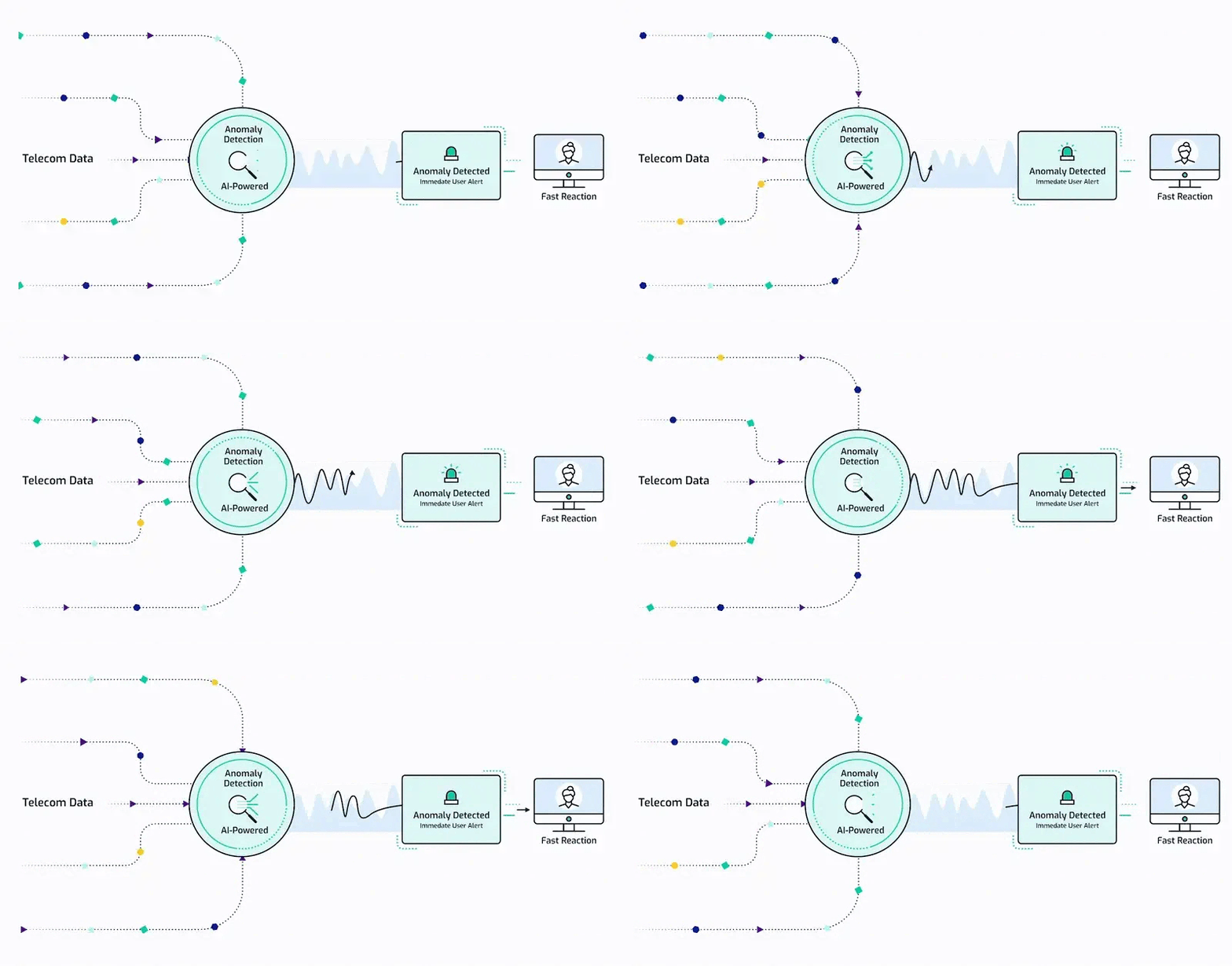
The AI powered anomaly detection function continuously learns from your unique input data to automatically adjust thresholds, so it’s optimized for your network – enhancing accuracy for your team and driving focused incident responses.

Automatically detect anomalies and accelerate Root Cause Analysis (RCA) and issue resolution.
Filtering issues from the mass of data to which you are exposed is a growing challenge. With today’s network complexity manual investigations and legacy alerting mechanisms is not enough to give you the scale you need to identify and categorize anomalies.
We’ve introduced an automated approach that enables your team to operate more efficiently, exposing and prioritizing anomalies, both individually and in clusters.
Anomalies represent deviations from expected performance in your network, indicating service impacting issues — now or in the future. AI-powered, anomaly detection means that you can automatically track KPIs, so you can focus on those that matter to your business.
Algorithms will automatically learn from the data and create the needed thresholds to automatically identify anomalies for different time series KPIs. Anomalies are grouped and tagged with priority indicators and show the number of customers impacted.
The AI powered anomaly detection function continuously learns from your unique input data to automatically adjust thresholds, so it’s optimized for your network – enhancing accuracy for your team and driving focused incident responses.

Group anomalies that relate to specific services – and view a timeline that highlights severity and frequency. You can view segments and dimensions associated with each deviation, enabling you to prioritize actions.
Add your own troubleshooting steps and comments to detected anomalies through the integrated knowledge base management backend – so the solution learns from your inputs and generates tailored summaries and recommendations.
Predict Network Behavior with Data-Driven Accuracy
AI/ML application of Kalix Analytics models analyze historical and real-time data to forecast demand and capacity needs, enabling proactive optimization, reduced risk, and efficient resource allocation across the network.
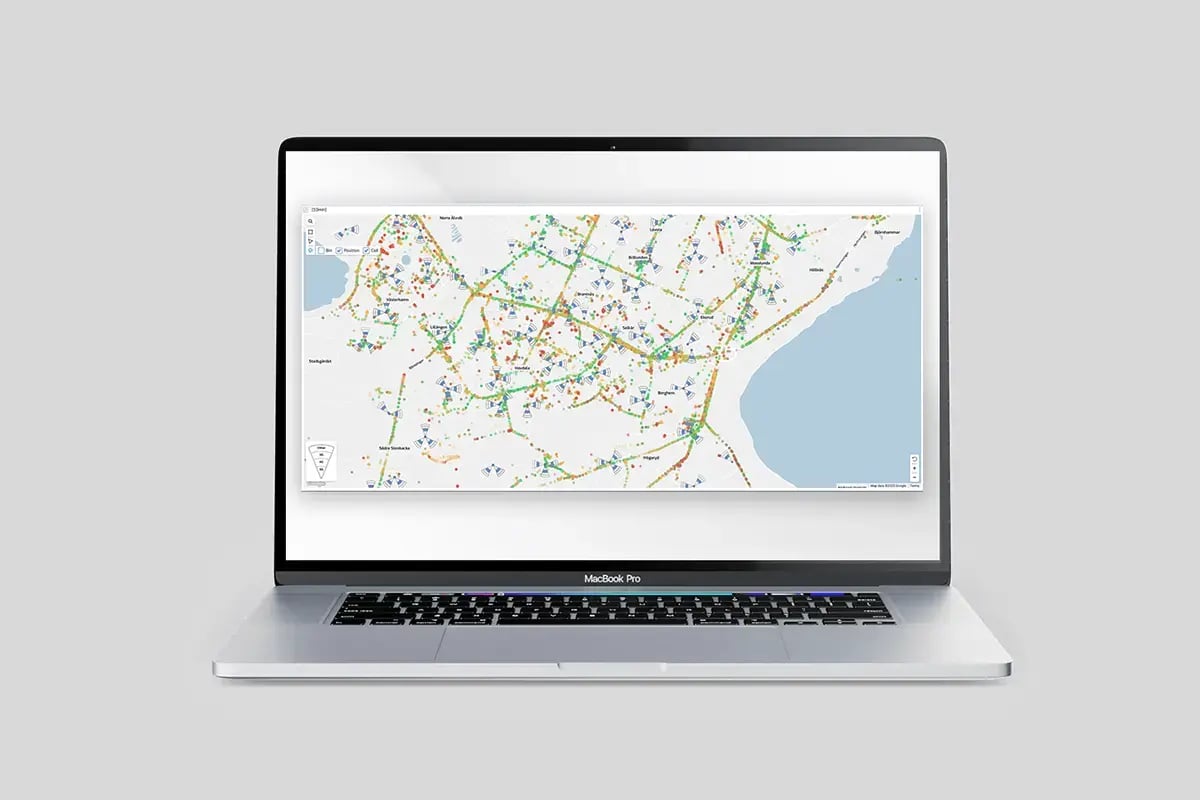
Use our ML-Driven Geolocation to Spot Coverage Issues
Our RAN monitoring solution visualizes radio performance data on Google Maps, offering a clear, geographic view. This enables users to analyze and resolve network coverage issues while pinpointing root causes.
Ensure High Service Quality for Homes and Smart Offices
Households and small offices are increasingly relying on fixed broadband connectivity for their internet access and business needs. Our FBB solution provides service-aware monitoring and analytics for any fixed-access technology.
Discover how emerging Artificial Intelligence (AI) and machine learning technologies can enhance operational efficiency in telecom operations. In this first article of a three-part series, Roman Šipula, Senior ML Engineer at Polystar, explores how AI-supported anomaly detection can help Network Operations Center (NOC) teams identify and address issues more effectively.
Discover how Polystar can elevate your incident isolation, tracking and performance delivered to your customers!
Discover how forecasting critical network KPIs in advance helps operators plan capacity, prevent congestion, and maintain consistent service quality.
Watch our on-demand session to explore Agentic RAG in telecom, featuring insights from our Head of AI Solutions and team. Access it here.
Discover why AI enhances, not replaces, developers, boosting productivity while relying on human creativity, direction, and technical expertise.
AI-powered anomaly detection uses machine learning to continuously analyze network, service, and customer experience data to identify unusual patterns that may indicate faults, performance degradation, capacity issues, or emerging service risks.
Unlike manual monitoring, AI can detect subtle deviations across large volumes of data in real time, helping telecom operators identify issues earlier and respond faster before customers are affected.
Anomaly detection helps reduce Mean Time to Repair (MTTR) by identifying issues as soon as they emerge and providing immediate visibility into abnormal network or service behavior.
Advanced AI models can correlate related events, highlight likely root causes, and prioritize incidents based on impact. This enables operations teams to troubleshoot more efficiently, accelerate resolution times, and minimize service disruptions.
Traditional threshold monitoring relies on predefined limits and generates alerts only when a KPI exceeds a set value.
AI anomaly detection learns normal behavior patterns from historical and real-time data and can identify unexpected changes even when thresholds are not breached. This enables earlier detection of emerging issues, adapts to changing network conditions, and reduces the need for constant manual threshold tuning.
False positives often occur when monitoring systems flag expected or harmless changes as faults. Common causes include static thresholds, seasonal traffic variations, planned maintenance activities, network upgrades, and temporary usage spikes.
AI-driven assurance solutions reduce false positives by understanding normal operational patterns, incorporating context, and distinguishing genuine service risks from routine fluctuations, helping teams focus on the most important issues.