Comprehensive Connectivity
Supports integration with multiple PLC-connected components for seamless system communication.
RACE PLC™ is a flexible and scalable solution for managing systems requiring connectivity to Programmable Logic Controllers (PLCs). Designed to integrate seamlessly with various components such as sensors, valves, motors, cameras, and actuators, it provides reliable control and automation for complex operations across diverse industries.

A Programmable Logic Controller (PLC) is a specialized computer used to automate industrial processes. It monitors inputs from devices like sensors and switches, processes data based on programmed logic, and controls outputs to operate actuators, motors, and valves.
Key features
PLC control systems are designed to provide precision and adaptability, making them essential for managing complex operations in diverse environments.
Supports integration with multiple PLC-connected components for seamless system communication.
Optimized for environments with stringent cleanliness standards, such as those found in semiconductor manufacturing.
Configurable for managing single devices or groups, adapting to specific operational requirements.
A production control system connects to a PLC through a combination of hardware and software integrations. PLCs act as the operational backbone, interfacing with sensors, actuators, and other devices to execute automated processes. RACE PLC™ ensures seamless integration, enabling real-time monitoring and efficient management of production control systems.
Sensors and input devices feed real-time data to the PLC.
The PLC processes this data using pre-programmed instructions.
Commands are sent to actuators, motors, or valves to execute precise actions.
PLCs communicate with higher-level production control systems like SCADA or MES for monitoring and optimization.
Applications
From semiconductor fabs to industrial automation.
RACE PLC™ was originally developed for Semiconductor Fabs, where precise control of sensitive environments is critical.
A notable use case involves regulating the flow of Nitrogen (N2) and Clean Dry Air (CDA) into storage locations for protecting dust-sensitive materials like semiconductor reticles. Its scalability allows for tailored configurations, whether managing a single stocker or coordinating multiple units.
Today, RACE PLC™ is used beyond the semiconductor industry for various purposes, including system monitoring, equipment operation, and automation requiring PLC connectivity. Its adaptability makes it suitable for industries that demand high-precision controls and robust automation solutions.
RACE PLC™ is a versatile control system connecting sensors, valves, motors, and actuators, delivering precision and reliability across industries.
RACE™ Suite Modules
Specifically designed to optimize and streamline automated material handling systems for high-volume manufacturing, providing the robust stability required for 24/7 factory automation.
RACE MCS™ is the world’s only third-generation material control system designed to maximize throughput and efficiency in semiconductor fabs.
RES-Q™, an emulation system for MCS modeling, minimizes risks in production by acting as Digital Twins, enabling error testing and seamless integration.
RACE Track™ optimizes vehicle selection, reduces empty vehicle travel, and improves route efficiency, resulting in significant performance improvements.
FAQ
RACE PLC™ connects factory automation software with PLCs and hardware-level devices. Its documented scope includes sensors, valves, motors, actuators, cameras, direct PLC communication, CDA and N2 purge management, and reticle or FOUP storage environments. It is used where higher-level applications need reliable status and control of physical factory devices.
The PLC executes programmed logic close to the machine and exchanges signals with sensors and actuators. RACE PLC™ is the software control application that communicates with one or more PLCs, coordinates device behavior, and connects that hardware layer with the broader factory-automation architecture. The exact division of logic, safety functions, alarms, and recovery actions must be defined for each system.
Yes. RACE PLC™ supports CDA and nitrogen purge-management use cases and reticle or FOUP storage environments, from a targeted stocker application to a wider connected configuration. Project validation should cover sensor accuracy, valve behavior, purge rules, alarms, equipment states, safety requirements, and integration with material or reticle-management systems.
RACE PLC™ operates at the hardware-control layer and can work with higher-level RACE applications or other production-control systems through the project’s defined interfaces.
RACE PLC™ handles PLC-connected equipment.
Interface design should specify commands, status messages, ownership, timing, exception handling, and fallback behavior.
RACE PLC™ can coordinate PLC-connected sensors, valves, and related devices used in sensitive storage environments, including CDA and nitrogen purge management. The application can expose equipment states and execute defined commands while higher-level systems manage material identity and workflow. The project must assign control, alarm, safety, and recovery ownership explicitly.
Validate the PLC models, signal list, device states, command sequences, network and interface requirements, safety interlocks, alarm handling, manual operating modes, failure recovery, and higher-level system responsibilities. Testing should cover normal cycles and abnormal conditions such as lost communication, inconsistent sensor states, device timeouts, and interrupted purge or storage operations.
The project must explicitly assign safety interlocks, permissives, sequence logic, alarms, manual modes, and recovery actions to the appropriate layer. RACE PLC coordinates software-level control and integration, while the PLC executes machine-level logic and signals. The approved design—not a generic product assumption—should determine which actions remain local and how higher-level systems respond to abnormal states.
We believe successful software implementation requires more than great technology—it needs people who understand your business. Our co-development model with industry leaders ensures solutions address real-world challenges.
Explore our resource library to discover how camLine supports high-tech manufacturers in enhancing quality, efficiency, and reliability.

Discover how the RACE™ Suite's digital twin technology improves manufacturing efficiency, accuracy, and optimization through advanced simulations and real-time data.
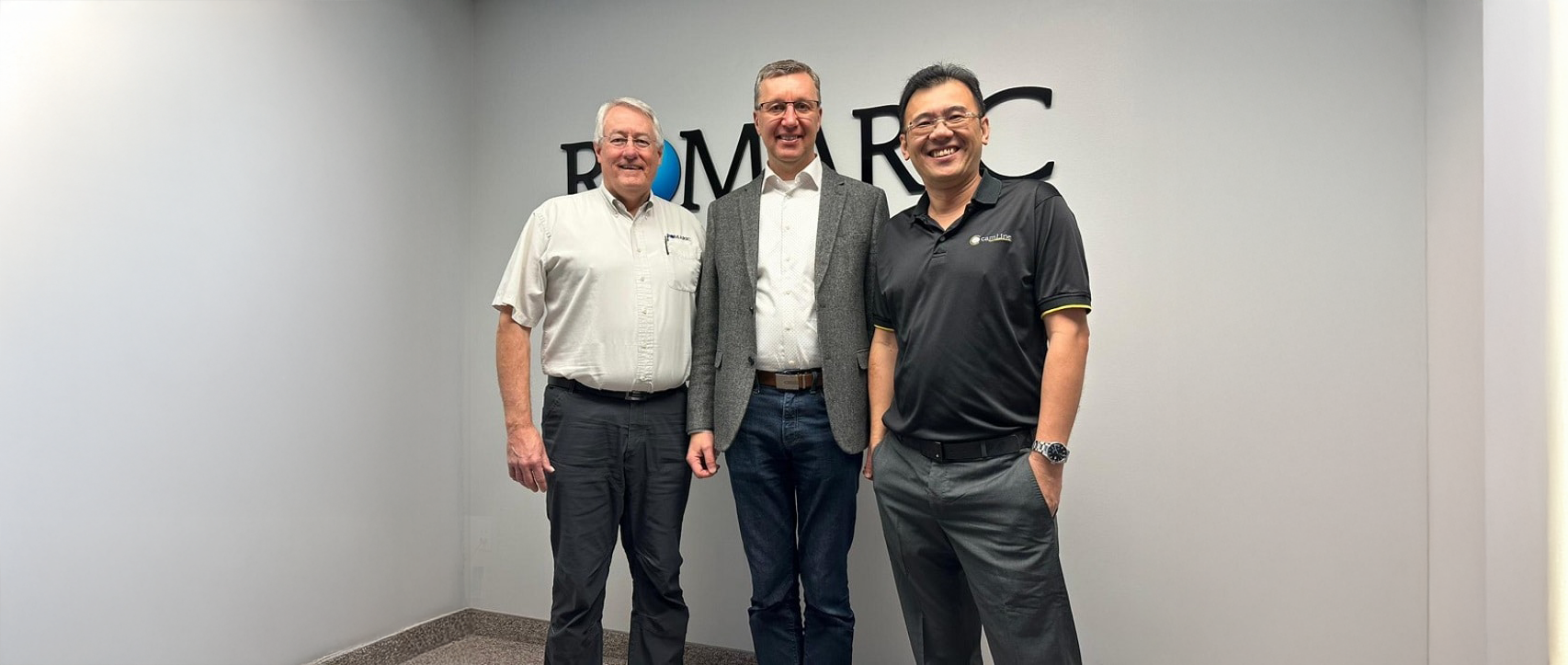
US-based software provider of material control systems (MCS) to be integrated with camLine, part of Elisa Industriq, Elisa manufacturing software business.

Mark D. Swanson Memorial Scholarship honors Romaric cofounder Mark D. Swanson, supporting computer science and engineering students with funding and careers.
Learn how Intel and camLine collaborate to enhance factory automation, improve system integration, and drive operational efficiency in manufacturing.
Learn how fabs can centralize recipes, standardize recipe models, prevent errors, and use lower-production periods for cleanup, testing, and training.
Explore how Intel® AFS and camLine RACE collaboration leverages Digital Twin technology, AI, and real-time data to boost factory efficiency and reduce downtime.
Our team is ready to deliver tailored MES solutions that streamline your production, improve product quality, and maximize efficiency across your operations. Tap into camLine’s decades of expertise in digital transformation to overcome your manufacturing challenges.