
How AI Will Deliver Value in 2026 | Polystar Telco Predictions
AI has rapidly gone from buzzword to ubiquity. As 2026 approaches, the real question is: where is the true value, and how do we unlock it?

How will Agentic AI play a role in telco operations – and what can it offer for Service Assurance? Read the article about how AI is reshaping telecom:

Listen to this article
The conversation around AI continues to evolve and is starting to dominate discussions.
Generative AI has already had a positive impact on the telecoms industry and continues to consume attention. Meanwhile, Agentic AI is now prominent on our agendas.
How will Agentic AI play a role in telco operations – and what can it offer for service assurance?
Agentic AI has attracted considerable attention across most industries and sectors. That’s primarily because it offers two key advantages over Gen AI. While GenAI helps users discover and filter information from a mass of data, Agentic AI can enable:
Decision making
Task execution
In other words, while GenAI helps us process data at unprecedented scale and velocity, Agentic AI approaches also enable autonomous processes and extended workflows. So, as the GSMA notes:
Agentic AI empowers systems to understand intent, make autonomous decisions, and execute complex task. GSMA - Agentic AI in Telecom
Naturally, this opens up an array of opportunities – which CSPs are eager to embrace. Let’s explore some of these in this emerging landscape.
Agentic AI will be at the heart of efforts to enable network automation and to support progress towards the upper levels of the TMF autonomous network framework.
For example, any workflow that requires consideration of different data sources in order to determine the next steps can benefit from Agentic AI – including customer care, service personalization and customization, provisioning and more. In this article, however, we’ll focus on what it can offer for operations and service assurance.
Let’s start with a simple example: Alarm handling. When network alarms are generated, they need to be analyzed, and appropriate responses taken. Any given alarm may have several possible actions for resolution, so an Agentic AI tool could evaluate these and, based on the available data, take a decision and implement the required change.
However, as industry analysts Omdia have noted, many such alarm conditions can already be resolved by rules-based algorithms , using deterministic not probabilistic principles.
Regardless, Agentic AI approaches to alarm handling and other issues are sure to proliferate – and much work has already been undertaken in this domain. It is, though, important to note that, despite such promise, AI is not always the answer.

But Agentic AI also offers promise for enhancing human-led decision making. By processing more data, faster, agents can support humans at critical moments. That’s because agents can be trained for specific roles, with relevant domain-focused data.
As consultancy firm Deloitte notes:
Imagine how an ensemble of specialized agents, working 24x7, will revolutionize core business capabilities for telcos.
What this points to is an ecosystem of telecoms AI agents that are optimized for specific tasks or designed to be experts with knowledge sets.
Consequently, it’s likely that CSPs will deploy a growing team of agents, covering operational domains such as customer care, business-level reporting, service management, capacity planning, and so on — and also service assurance.
As the GSMA also notes:
Agentic AI is becoming a key capability for mobile operators, with value across customer experience, operations, and service innovation.
With respect to service assurance, multiple agents will be required to handle this complex and diverse area. For example, there may be agents for Root Cause Analysis, Fault Management and more – with sub-agents that have specific expertise to support enquiry and decision making.
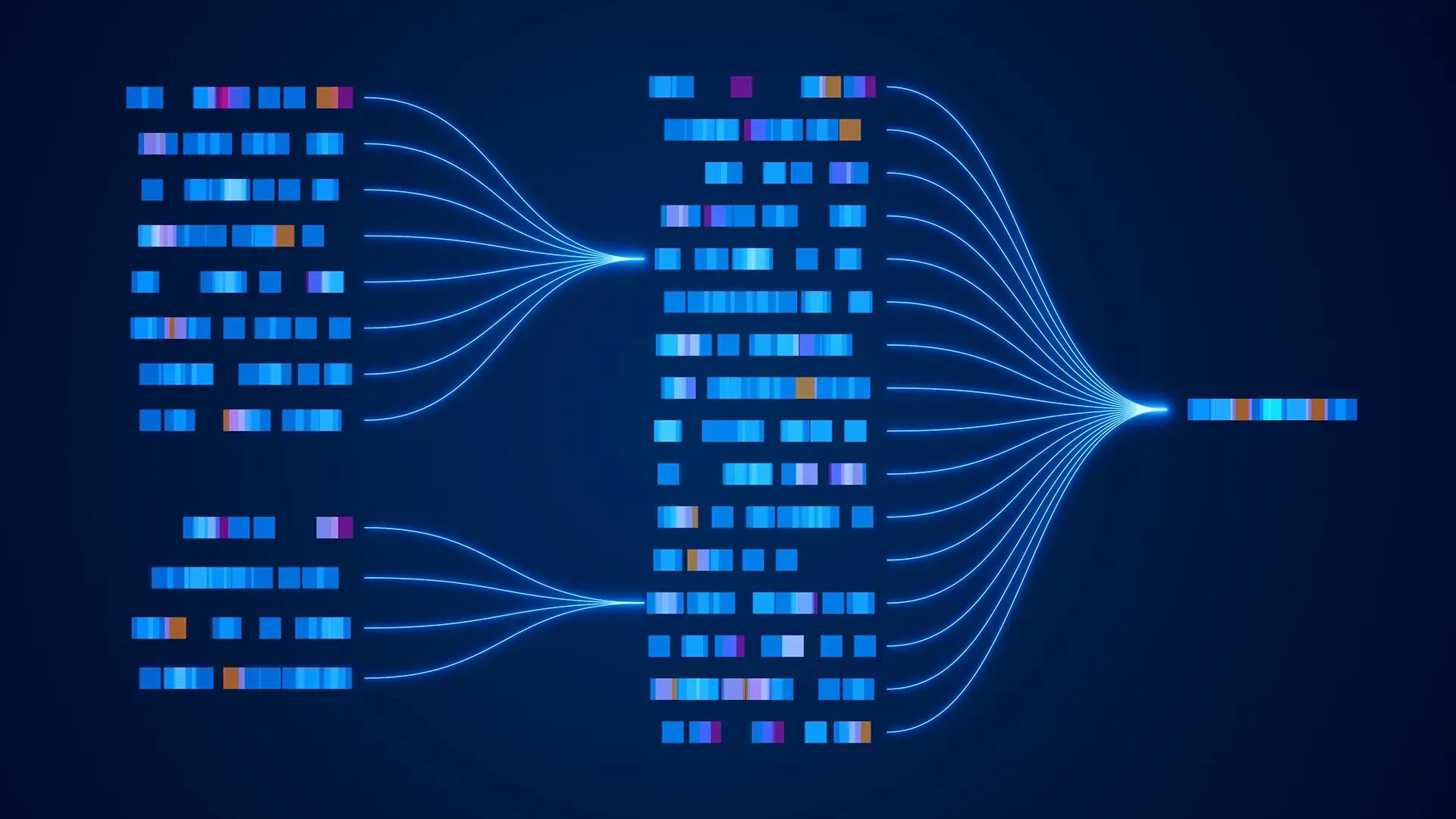
An example of an Agentic-enhanced approach to service assurance is a new, enriched data fabric that combines analytics, telco-optimized reasoning and agentic automation. It leverages a library of expert AI agents that provide access to insights that can support key problem-solving tasks, such as root cause analysis (RCA) – with different levels of agents that are orchestrated to deliver the desired outcomes.
To be successful with Agentic AI processing, though, a key challenge is to ensure that the data used for processing and suggesting actions is sufficiently cleansed and structured. In the context of telecoms service assurance, this means that the new agents must be trained on data, from multiple sources. This includes:
Control and User plane data from 5G, 4G, 3G and 2G networks
Performance management data from the underlying systems
Network alarms and their causes / outcomes
User and CRM data
Account data and policy rules
Service data, such as VoLTE
RAN conditions
And more
As with any AI system, the more relevant data that we can bring together, the better the outcomes we can expect – and so specialized agents are required, that are trained only on this knowledge set – data from the solution provider and from your networks, so they can understand the context of the queries, the performance demands and the outcomes expected.
Importantly, each agent should only be trained on a specific domain – say, the RAN or the transport layers, for example. In turn, this not only means each agent remains focused, but also that they can collaborate when issues cross domains or functions.
In other words, they help each other solve problems and suggest resolutions, acting in coordinated workflows – but with human oversight to ensure governance.
VoLTE Analysis Agent – focused on the unique service demands of VoLTE and the metrics that define service delivery. It is trained on both VoLTE theory (standards and flows) and practice, from network data.
Messaging Analysis Agent – trained on SMS and MMS, across all generations of mobile technology, with deep understanding of P2P, A2P and broadcast messaging.
Network Alarm Agent – specialized in different alarms, their causes and resolution actions, they are able to interpret alarms from all platforms in the OSS domain.
Connectivity Analysis Agent – able to collect and check connectivity across user devices and supporting infrastructure, validating against KPIs and SLAs.
So, for RCA to be effective — and to accelerate the process — an agent that observes a fault from a RAN system may have been trained to check with other agents to gather information that might be relevant – user connectivity in a given location, call drops, packet lost and so on, so that the problem can be traced to its source.
At the same time, potential remedies can be identified and the most likely flagged.
Similarly, the RCA agent could interact with supporting agents to gather the requisite information for human overseers.
A clear chain of reference and suggested resolution that allows a human engineer to make the final decision – which could be as simple as replying to the relevant agent and giving the go-ahead for the identified action to be taken.
In this case, the agents do the heavy lifting and can effect the resolution but they do so under control of an expert. And, once the decision has been taken, the success of the action can be tracked so that future suggestions are optimized still further.

But there are many other areas where more complex issues are faced, and different kinds of outcomes are required. Of particular interest are decisions that span different systems and network functions.
Let’s consider an example. A connectivity agent detects and recognizes that a Fixed Wireless Access connection to a customer location is underperforming. The suggested remedy is to increase the capacity of the link. To do so, the resource inventory needs to be checked to see if additional capacity is available.
This can be accomplished through API integration – but it can also be accomplished by enabling Agentic AI solutions to interact and to exchange information. To achieve that, a new way of enabling secure, governed interaction between AI agents has been proposed and is now being adopted: MCP or Model Context Protocol.
This will enable interaction across multi-vendor environments, allowing AI from different systems to interact and to share knowledge and information – fetching relevant data from other platforms to support agentic-drive tasks and processes.
Such systems include Service Assurance platforms, CRMs, network resource inventory platforms, the transport layer, the RAN – and more, accelerating the trajectory towards enhanced autonomous operations.
While the adoption of MCP in telecoms is in its infancy, we can expect rapid advancements as vendors implement Agentic capabilities and seek to enable cross-platform interaction and information exchange.