Discrete Manufacturing

Plan, schedule, and deliver on time - with full visibility over every production step 

In discrete manufacturing, every production order matters - and so does every hour of delay. Managing intricate supply chains, multi-level production processes, and quality across assembled products is complex. The difference between hitting delivery targets and missing them often comes down to how well you can plan, adapt, and execute. That's where we come in. 

We bring together operational intelligence and deep industry expertise to help you plan and manage every production phase - from demand to shop floor - in an integrated and efficient way.


Article

Shaping the Future of Discrete Manufacturing: Trends Driving Operational Intelligence

Real-time visibility, connected planning, AI across functions: five trends reshaping discrete manufacturing operations, with a clear-eyed look at what actually moves the needle on the shop floor.

With sedApta, you can:


Efficiency

Optimize production planning and reduce lead times.

Sustainability

Eliminate waste and improve resource utilization.

Quality

Increase product quality through real-time monitoring and predictive analysis.

Agility

Quickly respond to market changes with flexible and modular solutions.

Your competitive edge starts with operational intelligence

Through our collaborative approach, we work side by side with your team to turn operational data into tangible results: higher margins, lower costs, and sustainable growth. 

As your strategic partner, we guide you through every step of the transformation - with the operational intelligence to move fast, adapt to change, and grow sustainably. 

Related industries


sedapta_automotive industry-1

Automotive

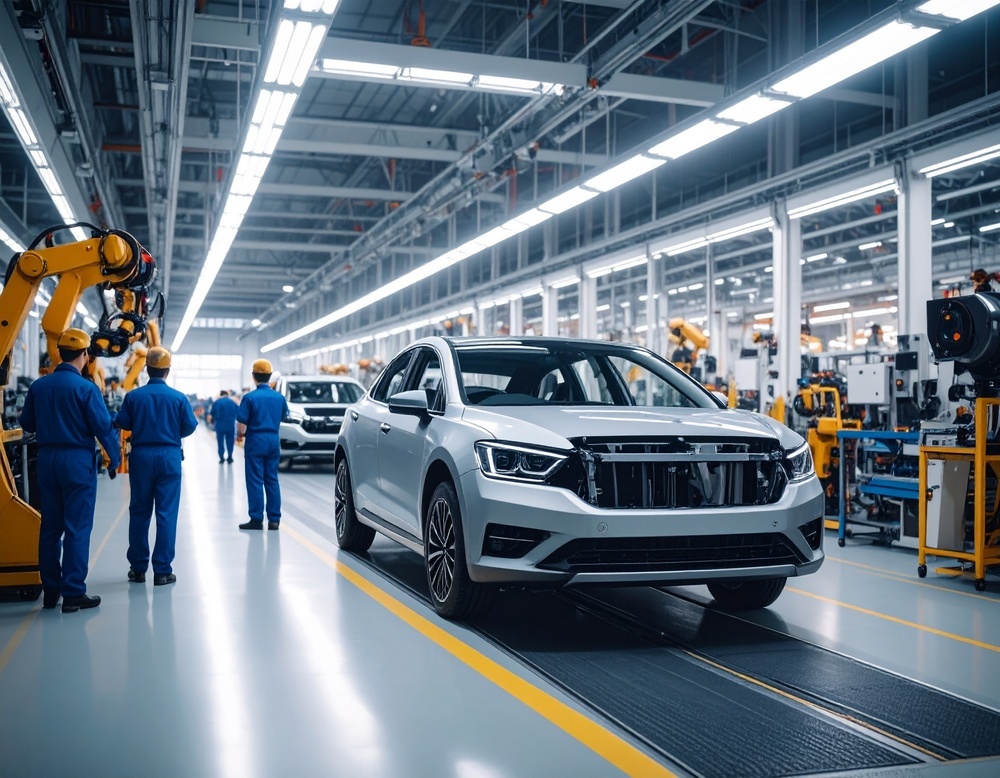
Automotive manufacturers that integrate planning across finished products, components, and supplies in a unified environment gain greater efficiency and responsiveness to demand fluctuations.

Read More

Trusted by


Antonio Carraro
FIAMM
Marelli
guzzini
THYSSENKRUPP

Discover more


FAQ


  • Discrete Manufacturing produces finished goods by assembling distinct components: vehicles, electronic equipment, home appliances, industrial machinery. Each item can be counted, identified and traced individually, and can often be taken apart again. Continuous or process manufacturing, by contrast, transforms raw materials through recipes and formulations (mixing, chemical reactions, cooking), and output is measured in batches, litres or kilos. Planning logic changes accordingly: in discrete manufacturing, multi-level bills of materials, routings and component availability are what matter.

  • Discrete Manufacturing covers every industry that builds products from distinct components. The sectors sedApta works with include automotive, machinery and plant builders, industrial equipment manufacturing, home appliances, woodworking and plastic moulding. The same production model is typical of aerospace, electronics and durable consumer goods, where the core challenge is coordinating many components, suppliers and assembly steps.

  • Discrete manufacturers run supply chains with many suppliers and components, multi-level bills of materials, and processes where a delay on a single part can stop final assembly. On top of that, they need consistent quality on every unit and must cope with increasingly volatile demand, which makes it hard to keep production plans, inventory and promised delivery dates aligned.

  • sedApta connects demand forecasting, inventory and production planning, order promising and factory scheduling in one suite. Data flows from one level to the next without intermediate spreadsheets: a change in demand is reflected in the production plan and in the shop-floor schedule. Planners and production managers work on the same information and make decisions guided by up-to-date operational data.

  • For Discrete Manufacturing, the sedApta suite covers four areas. Supply Chain Planning: Demand Management, Intelligent Forecasting, Inventory Management, Production Planning, Order Promising, DRP and DDMRP. Manufacturing Operations Management (MOM): Factory Scheduling, MES, Smart Asset Management and sedApta Edge IIoT. Supply Chain Execution: Warehouse Management System and Transportation Management. Digital Transformation: Analytics, AI and Machine Learning, Demand Driven Manufacturing+ and the Simulation Control Tower. Which modules to start with depends on each company's priorities.

  • The first step is planning against the real capacity of departments and machines and the actual availability of components, not just theoretical requirements. With Production Planning and Factory Scheduling, the plan becomes an executable schedule, while Order Promising lets you confirm realistic delivery dates to customers. If a component arrives late, the system shows the impact on orders and helps you replan quickly, reducing waiting times and lead times.

  • The MES and shop-floor data collection through sedApta Edge IIoT record what happens in production in real time: progress, machine parameters, and the components and lots used for each product. This builds a complete history for every unit, useful for recalls, complaints and audits. Predictive analytics based on AI and Machine Learning help spot process drift and early signs of failure, so teams can act before they turn into defects or downtime.

  • Good planning means making what is needed, when it is needed. More accurate demand forecasts and tighter inventory management reduce overproduction and idle stock. Finite-capacity scheduling cuts unnecessary set-ups and machine idle time, while monitoring equipment and consumption makes waste visible. sedApta also has a dedicated Sustainability in the Supply Chain area to measure and improve the impact of operational choices.

  • Yes. The sedApta suite is modular: you can start with the area causing the most trouble today, such as factory scheduling, demand forecasting or warehouse management, and add other modules later. The modules are designed to work together and to integrate with systems already in place, such as ERP and shop-floor systems, so the project can grow in phases without starting over.

  • Discrete manufacturers working with sedApta include Antonio Carraro, FIAMM, Marelli and thyssenkrupp. Electrolux Professional Group chose sedApta as an agile, global and reliable platform for the digital transformation of its supply chain. Mitsubishi Logisnext Europe digitalised production control to modernise and automate its factory operations. In a video, CMT Orange Tools explains how supply chain digitalisation improved efficiency, traceability and on-time delivery.
Explore how operational intelligence can transform your business.