Process Manufacturing

Efficiency, Precision, and Sustainability with sedApta

In process manufacturing, a batch that misses a quality threshold, a schedule that fails to account for regulatory change, or a supply disruption that hits at the wrong moment - these are not edge cases. They are the daily reality for companies in chemicals, pharmaceuticals, food & beverage, and specialty materials. Managing complex workflows while staying compliant, efficient, and sustainable requires more than good intentions: it requires full operational control. 

sedApta partners with leading process manufacturers to turn operational complexity into a structural advantage. We connect process control, production planning, and supply chain management - so your teams work from a single source of truth, with full visibility at every stage. 

Article

Trends in supply chain management

Nearshoring, AI-driven planning, and sustainability mandates are reshaping how process manufacturers compete. A practical guide to turning 2026's key supply chain trends into resilience and measurable margin gains.

With intelligent tools for batch scheduling, real-time quality monitoring, and demand-driven inventory management, we enable manufacturers to:


Efficient

Optimize production processes and reduce cycle times

Compliance

Ensure strict compliance with regulatory and quality standards

Agile

Adapt quickly to changing demand and supply conditions

Sustainable

Minimize waste and energy consumption to boost sustainability

Visible

Enhance end-to-end visibility for better decision-making

When precision and reliability are non-negotiable, you need a partner who understands your operations end to end. We work alongside process manufacturers every day - to make planning more accurate, execution more consistent, and growth more sustainable. 

Related industries


A modern and clean visual representation of the life sciences industry  minimal and clear design with soft lighting and a sense of innovation and change

Life-Sciences

In life sciences, a failed batch, a regulatory audit, or a sudden change in demand for a personalised treatment can cost far more than production time. You need planning and execution systems that keep pace with your quality and compliance requirements.

Read more

Trusted by


abbot
abiogen
Diasorin
MIPHARM
sothema

Trusted by Industry Leaders


FAQ


  • Process Manufacturing turns raw materials into finished goods through recipes, formulations and chemical, physical or thermal processes: mixing, fermentation, melting, reaction. Output is measured in batches or quantities (litres, kilos, tonnes) and, once made, cannot be broken back down into its ingredients. Discrete Manufacturing, by contrast, assembles distinct components into countable units. That is why process manufacturing demands very tight control of parameters, batches, yields and cycle times.

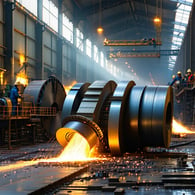
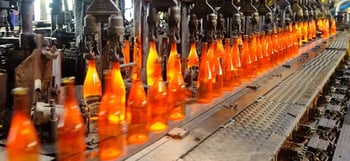
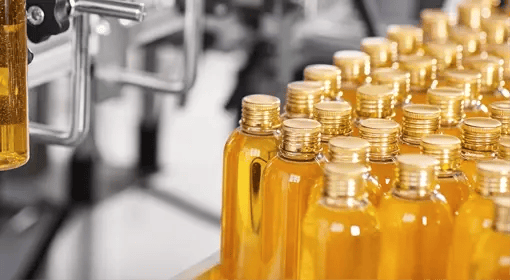
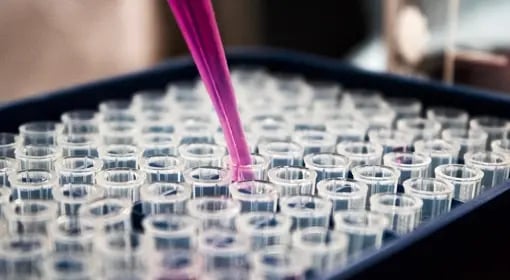
  • Process Manufacturing includes every industry that works in batches and formulations: chemicals and process specialties, pharmaceuticals and life sciences, cosmetics, food & beverage, metals, glass and specialty materials. sedApta serves these sectors with solutions built for their complexity, from recipe and batch management to industry-specific regulatory compliance.

  • Process manufacturers have to control complex flows, with sequencing constraints, cleaning and changeover times, shelf life and plant capacity. Quality must be guaranteed and documented batch by batch to meet strict regulations, especially in pharma, cosmetics and food. Meanwhile, markets move fast: demand and raw material availability fluctuate, and plans have to adapt without compromising efficiency or compliance.

  • sedApta connects supply chain planning (demand, inventory, production, distribution), factory scheduling, MES and plant data collection with sedApta Edge IIoT in one suite. The plan reaches the shop floor, production data flows back to the plan in real time, and decision-makers get end-to-end visibility from procurement to delivery. The solutions integrate with existing ERP and automation systems.

  • Batch scheduling decides in which order and on which equipment batches are produced, taking into account capacity, recipes, cleaning and set-up times, colour or allergen sequences and material availability. With sedApta Factory Scheduling, the schedule is calculated at finite capacity and can be recalculated quickly when something changes. Better sequences mean fewer changeovers, less downtime and therefore shorter cycle times.

  • sedApta MES collects process and quality data in real time directly from the equipment, links it to each batch and flags out-of-spec values immediately. Every step is recorded, producing the documentation needed for audits, certifications and industry regulations. Compliance becomes part of daily work rather than an after-the-fact paperwork exercise.

  • Demand-driven inventory management, based on the DDMRP methodology, places buffer stock at strategic points in the supply chain and recalibrates it according to actual consumption, instead of chasing forecasts that keep changing. When demand speeds up or a supplier is late, the buffers absorb the impact and the system shows what to reorder and with what priority. The result is more stable service levels with less overall inventory.

  • In process manufacturing, waste often comes from rejected batches, frequent changeovers, overproduction and equipment running inefficiently. Scheduling that reduces changeovers, real-time quality control that catches deviations early and planning aligned with actual demand all cut scrap and consumption. Monitoring equipment and utilities then shows where more energy is being used than necessary.

  • End-to-end visibility comes from connecting data that often sits in separate systems: orders, inventory, plans, production progress, quality and logistics. sedApta brings them together and makes them readable through Analytics and the Simulation Control Tower, which also lets you simulate alternative scenarios before deciding. Disruptions are spotted immediately and their effects can be assessed before acting.

  • In life sciences and pharmaceuticals, sedApta works with companies such as Abbott, Abiogen, DiaSorin, MIPHARM and Sothema. Available testimonials include an interview with Stefan Fink of thyssenkrupp Steering, who explains how the company manages production planning with sedApta. To explore the cases closest to your business, you can contact the Elisa Industriq team and request a demo.

Discover how sedApta can transform your business