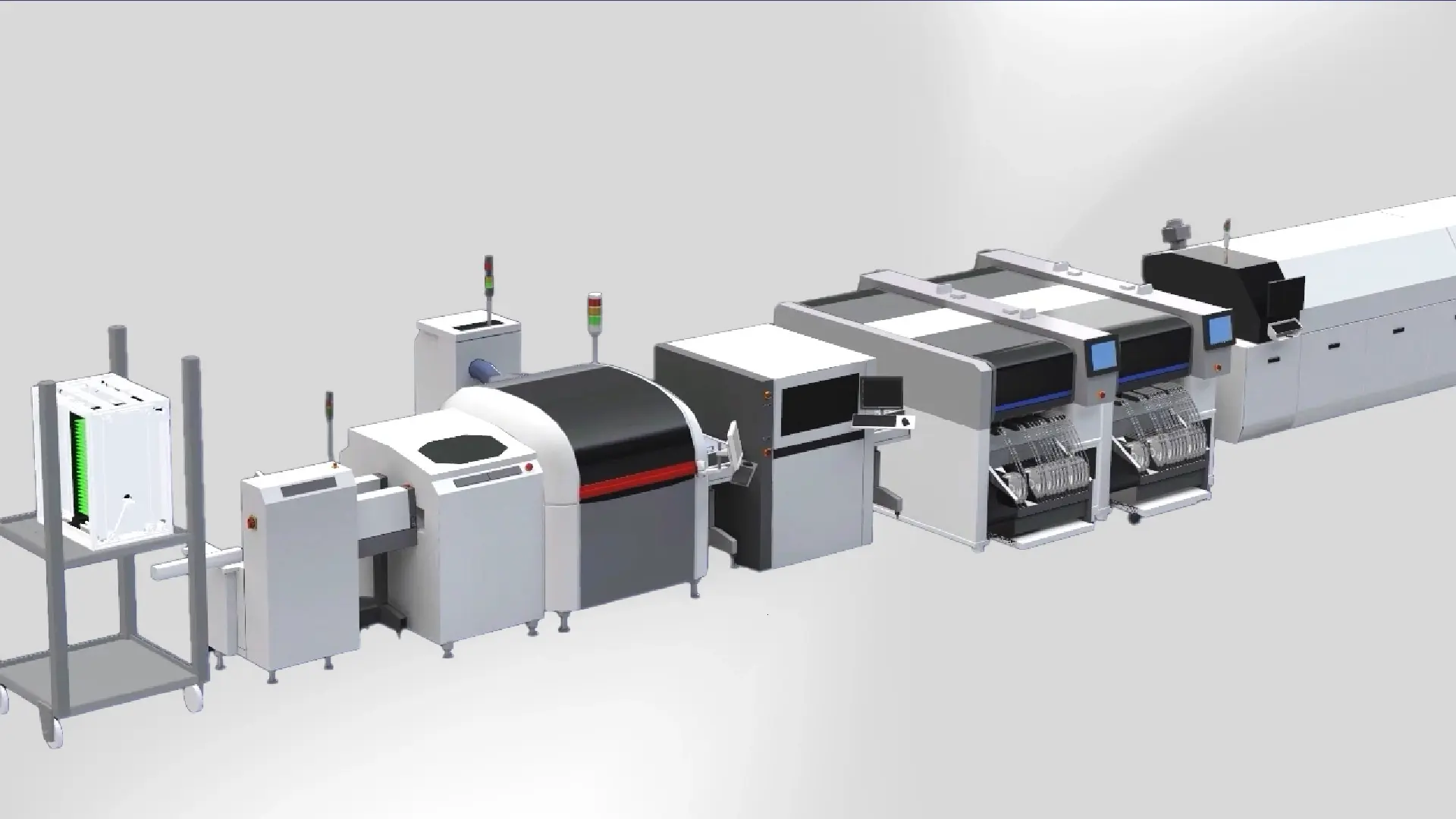
Frequent SMT line changeovers allow manufacturers to produce different products and lot sizes on the same equipment. However, each changeover introduces another opportunity for materials to be loaded incorrectly, feeder positions to be mismatched, or setup conditions to remain incomplete.
This Work Smarter video shows how SMART Assist, part of camLine’s SMT manufacturing solution, supports material setup validation, first-panel qualification, real-time feedback, and cascading changeovers.
Why Frequent SMT Line Changeovers Increase Setup Risk
SMT line setup requires the planned product, materials, reel positions, and equipment configuration to match. When these checks depend mainly on manual coordination, a small setup error may remain undetected until inspection or later production stages.
The risk becomes more significant in high-mix environments where teams perform several changeovers and must prepare new material configurations within limited production time.
A digital assistance workflow gives operators immediate information about whether the identified material and position correspond with the planned setup.
How SMART Assist Supports SMT Line Setup
SMART Assist connects setup validation with the current production job. It helps operators review material positions, qualify the first panel, and receive feedback when a configured setup condition is not met.
Table 1. Four Capabilities of SMART Assist for More Controlled SMT Line Setup
| Capability |
How it supports the changeover |
| Material setup validation |
Checks whether identified materials and reel positions match the expected setup. |
| First-panel qualification |
Supports validation of the first panel before the remaining batch proceeds. |
| Real-time feedback |
Makes detected setup discrepancies visible so operators can review and correct them. |
| Cascading changeover |
Supports preparation for the next batch while the current batch is still being completed. |
Connect Setup Validation with Production Release
SMART Assist helps make material checks, first-panel qualification, and changeover progress part of a connected production workflow.
Operators and supervisors gain a clearer view of whether the setup matches the production requirements and what must still be completed before the batch continues. The applicable validation and release process remains based on the configured workflow and the manufacturer’s production procedures.
Explore LineWorks Suite
FAQ
Q: Why are frequent line changeovers challenging in high-mix SMT production?
A: Frequent line changeovers require SMT teams to replace materials, configure feeder positions, and verify that the line matches the next product or batch. When these activities rely on manual coordination and checking, changeovers can take longer and incorrect components or positions may remain undetected until production starts.
Q: What setup errors can a digital SMT line-assistance workflow help prevent?
A: It can help detect mismatches between the planned job and the materials, feeder or reel positions, machine setup, and first-panel qualification status captured by connected systems.
The camLine workflow validates setup conditions before or during release and provides feedback when a configured requirement is not met. Prevention depends on complete setup data, reliable identification, and correctly defined validation rules.
Q: How does SMART Assist support material and reel position validation?
A: SMART Assist validates the material setup by comparing the identified component and its reel position with the setup required for the current product or production order. If the component or position does not match, the workflow provides immediate feedback so the operator can correct the setup before production continues. Reliable validation depends on accurate material identification, complete setup information, and correctly configured validation rules.
Q: How does SMART Assist support first panel qualification and SMT line changeovers?
A: SMART Assist supports first panel qualification by validating the first panel of a batch before full production proceeds. If the qualification identifies an issue, production can be paused while the setup is corrected. Cascading changeovers can also prepare the next production setup while the current batch is still running, helping reduce the time between production orders.
Q: What should be included in a production readiness test for SMART Assist?
A: A production readiness test should confirm that SMART Assist identifies both valid and invalid SMT line setup conditions before full production begins.
The test should include:
-
correct and incorrect materials;
-
correct and incorrect reel positions;
-
missing or unreadable identifiers;
-
approved alternate components;
-
material replenishment;
-
first panel acceptance and rejection;
-
production order changes;
-
equipment communication loss; and
-
authorized overrides.
The manufacturer should also confirm when SMART Assist provides guidance, when production is paused, who may approve an exception, and how production safely resumes after the issue is corrected.