
Discover how agile supply chain management helps fashion and luxury brands reduce risk, protect margins and respond faster to volatile demand.

Listen to this article
Transform volatility into competitive advantage with synchronized planning and resilient operations
As global supply networks face constant change, fashion and luxury leaders need to adapt quickly while protecting their margins and brand. This article explores how agile supply chain models improve decision-making, reduce risk, and strengthen business performance in a market as competitive as fashion.
Key Takeaways
- Why the fashion and luxury supply chain playbook is different from other industries
- How an agile supply chain can help you reduce risk and improve cash flow
- Why luxury supply chains require a different approach from volume-focused segments
- Why sustainable supply chain management is key to profitability
You’re asked to protect margins and service levels in a market that’s known for volatile demand and short product lifecycles. One delayed shipment or missed trend, and a high-margin collection can turn into a loss of profit.
Today’s shoppers expect personalised experiences for luxury. While consumers demand faster and more tailored experiences than ever, many European fashion companies have struggled with ongoing supply chain disruptions over the past years.
The traditional response to such disruptions was larger inventories and static planning, but this is no longer viable. Keeping too much stock locks up money and increases the risk of products going unsold, while fixed plans can’t adjust when demand or supply changes quickly. So how can you meet customer expectations during this growing uncertainty?
The answer lies in supply chain agility.
Fashion supply chain management today
Supply chain management for fashion overlooks the entire journey from raw material to the end consumer. It coordinates the flow of materials and finances across the supply chain.
But what makes it different from other manufacturing sectors is its extreme volatility:
- Consumer preferences can shift weekly (often driven by trends and social media)
- Product lifecycles can be as short as six weeks due to seasonality
- End-of-season discounts reduce profitability
- Supply chain management is global, with networks vulnerable to disruptions
This uncertainty is a top concern for fashion leaders in 2025. In fact, 39% of respondents to a BOF-McKinsey survey believed that conditions will get worse (BOF-McKinsey, The State of Fashion 2025).
You need to manage thousands of stock-keeping units (SKUs) across many style, pattern, colour, and size combinations while also predicting demand for multiple sales channels. You also need to make decisions about products six months before they hit the sales floor, long before real-world consumer validation is possible.
This can only be possible with a data-driven, agile supply chain management software that provides you with real-time visibility across the supply chain.
Table: Traditional vs. agile fashion supply chain
|
Characteristic |
Traditional supply chain |
Agile supply chain |
|
Planning cycle |
Seasonal, fixed |
Continuous, adaptive |
|
Approach to inventory |
Buffer stock if demand exceeds forecast |
Dynamic allocation based on real-time demand |
|
Responsiveness |
Months to respond to trends |
Weeks or days to pivot |
|
Risk management |
Reactive problem-solving |
Proactive scenario planning |
As we can see, traditional and agile supply chain models take very different approaches. Traditional planning relies on fixed schedules and high inventory buffers, making it slow to react when demand changes. Agile supply chains, in contrast, use real-time data to adjust plans continuously, reducing waste and improving responsiveness when market conditions shift.
Key stages of the fashion supply chain
Each stage of luxury and fashion supply chain management comes with its own challenges and requirements.
- Design and development:
This phase turns creative ideas into real products. Luxury collections typically work on 12-18 month timelines, creating significant risk when customer preferences or economic conditions shift.
- Material sourcing:
This involves buying fabrics, trims, and other components from a global network of suppliers across multiple countries with different regulations.
- Manufacturing and production:
Creating finished goods requires coordinating internal production facilities with external subcontractors and specialized artisans. Collaborative planning tools enable real-time visibility across this manufacturing ecosystem, allowing brands to adjust capacity allocation when demand signals emerge and maintain quality oversight across the entire network.
- Distribution and allocation:
Once production is complete, products must be allocated to the locations where demand exists. The challenge is making allocation decisions months in advance while keeping flexibility to redirect inventory as actual demand patterns emerge.
- Reverse logistics:
Managing product returns and unsold inventory represents a final consideration in the supply chain cycle. Forward-thinking brands consider reverse logistics in their initial planning to reduce waste and protect brand integrity.
Who are the key players in the fashion and luxury supply chain?
While internal stakeholders include designers and production planners, the external stakeholders are just as important:
- Tier-1 suppliers: Handle final assembly and manage relationships with deeper-tier suppliers, making them essential for visibility and quality control.
- Logistics providers: Act as supply chain orchestrators to enhance visibility, security, On-Time In-Full (OTIF) deliveries, and the premium delivery experiences that define luxury brands.
- Technology providers: Offer platforms for real-time data sharing and scenario planning to help you adapt quickly to change.
- Regulatory bodies: Regulations like the Digital Product Passport (DPP) directly shape supply chain architecture by requiring transparency and product lifecycle information.
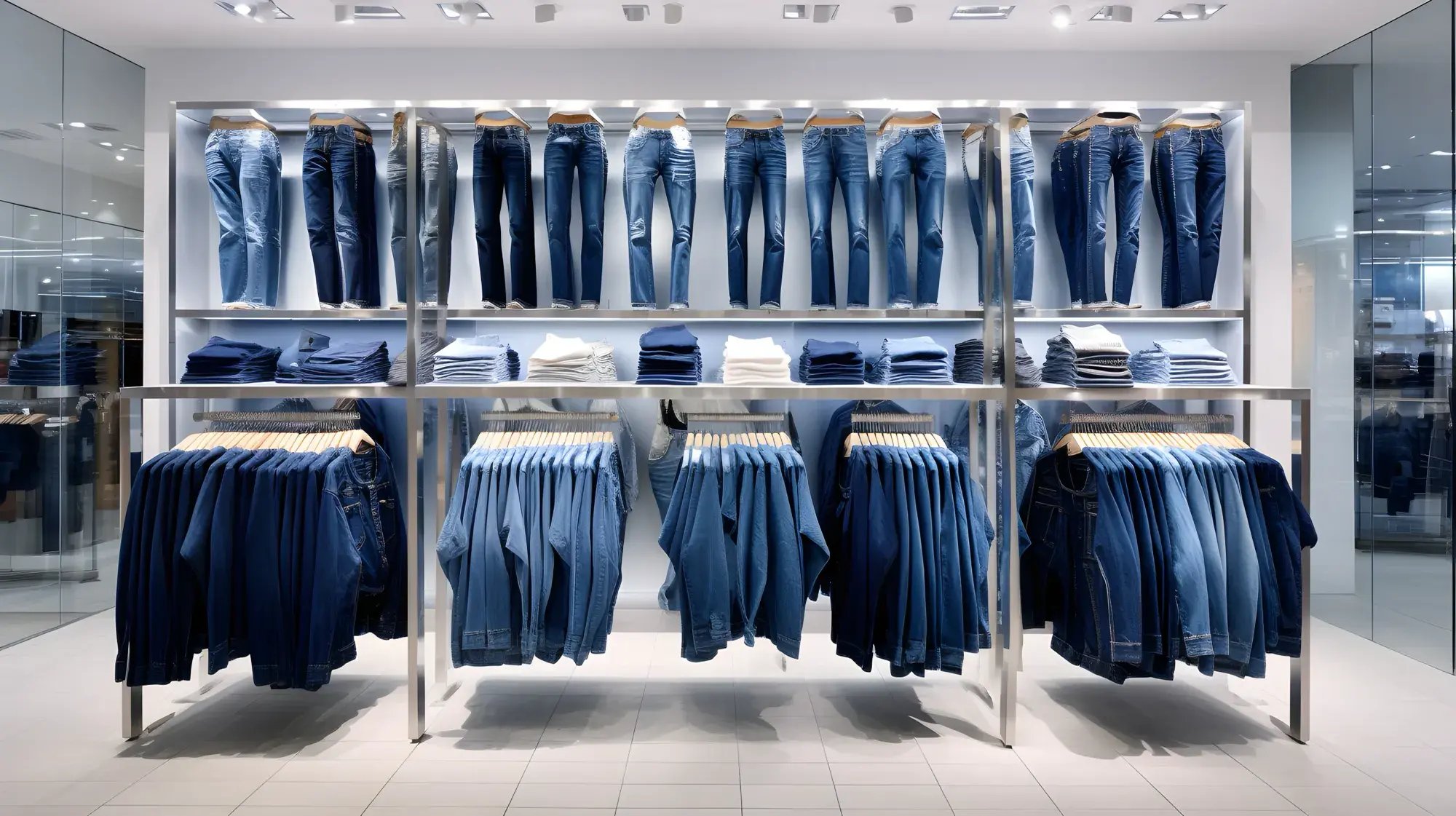
Planning seasonal collections with confidence
Every season, you might face the same dilemma: commit too early and risk unsold inventory, or delay and miss demand. Agile planning solves this problem by synchronizing design data with procurement and production.
Key objectives of seasonal fashion supply chain planning
Effective seasonal planning needs to deliver several competing priorities simultaneously:
- Maximize full-price sell-through: Aligning inventory precisely with actual demand to preserve margins.
- Minimize costly discounts: Avoiding the loss of profit that occurs when 25-50% of potential revenue is lost to end-of-season price cuts.
- Ensure on-time collection launches: Capturing crucial early-season demand at full price.
- Optimize production capacity: Efficiently utilizing a global network of suppliers.
- Balance risk: Spreading investments across different product categories and price points.
How synchronized planning reduces price cuts and costly last-minute changes
Traditional planning operates in silos, leading to inflexible plans and reactive fire-fighting. Synchronized planning breaks down these barriers by creating a unified view of the entire product lifecycle.
This approach uses specialized software to run "what-if" scenarios, allowing teams to test decisions in a risk-free environment before commitments are locked in. Demand sensing uses real-time sales data to detect trends as they emerge, moving beyond reliance on historical patterns.
The financial impact is substantial. Brands that implement synchronized planning typically see an 8-15% reduction in price cuts (Accenture, 2023) and 20-40% faster time-to-market (McKinsey, 2024). This is achieved by:- Proactive risk mitigation: Identifying alternative suppliers and simulating production impacts within hours, not weeks, during disruptions.
- Informed trade-offs: Enabling cross-functional teams to make decisions balancing cost, speed, and quality with full visibility of the consequences.
- Continuous forecast refinement: Using AI and machine learning to refine forecasts based on early sales signals and external market data.
Optimize inventory allocation and production planning
Inventory is both your largest asset and greatest risk. Static inventory models that rely solely on historical forecasts create either costly stockouts or expensive overstock. Agile supply chain management requires aligning production decisions with real-time demand signals.
Here's what you can do to optimize your inventory allocation:
- Align production with actual demand signals: Instead of relying only on forecasts made months in advance, agile systems use real-time sales data to adjust production and allocation decisions. By monitoring early sales signals and market trends, brands can shift production capacity between product lines, adjust order quantities with subcontractors before commitments are locked in, and redirect finished inventory to locations showing stronger demand. This demand-driven approach helps products move through inventory faster while maintaining service levels and reducing the risk of end-of-season markdowns.
- Coordinate allocation across your distribution network: Effective allocation means getting the right products to the right locations at the right time. This requires visibility across your entire distribution network and the ability to make informed trade-offs between speed, cost, and service levels. Brands that excel at allocation can balance regional demand variations with transportation costs, adjust distribution plans as demand patterns emerge, and optimize inventory positioning across multiple distribution centers and channels.
- Factor in the full product lifecycle: Forward-thinking brands consider the entire product lifecycle when making production and allocation decisions. This includes planning for potential returns, unsold inventory, and end-of-season stock to reduce waste and protect brand integrity.
Supply chain agility for luxury fashion brands
While supply chain agility matters across the fashion industry, luxury brands face unique challenges that require a fundamentally different approach compared to volume-focused segments.
Balancing craftsmanship with supply chain flexibility
Luxury supply chains prioritize craftsmanship and control, focusing on preserving brand heritage and exclusivity through attention to detail. Many luxury brands rely on artisanal production which is difficult to scale while maintaining quality. Unlike fast fashion's emphasis on speed and volume, luxury brands operate on 6-12 month production cycles that require coordinating specialized materials, skilled artisans, and quality control standards.
This extended timeline creates specific supply chain challenges: committing to production capacity months in advance, managing complex networks of specialized subcontractors, and maintaining brand standards across geographically dispersed manufacturing.
Flexible supply strategies that allow mid-season adjustments
Luxury brands need flexibility in operations while preserving quality and exclusivity. While volume-focused segments achieve flexibility through postponement strategies and multi-sourced production, luxury flexibility requires different mechanisms:
- Strategic reserve capacity: Maintaining buffer production slots with trusted artisans for in-season opportunities.
- Collaborative supplier relationships: Developing deep, exclusive partnerships with specialized manufacturers capable of accommodating mid-season adjustments without compromising quality.
Real-time sales data and predictive analytics provide the insights necessary for informed adjustment decisions throughout the season.
Using limited releases to create exclusivity without stockouts
Limited releases require careful supply chain planning to balance exclusivity with availability. Luxury brands use scarcity as a fundamental brand-building tool:
- Exclusive collections: Small-batch releases that generate demand without significant inventory risk.
- Client-first access: Prioritizing high-value clients for limited availability items to reinforce brand loyalty and exclusivity.
- Staged launches: Phasing product availability across regions to extend novelty and demand cycles.

Sustainability that pays back
Sustainability has evolved from a PR strategy to a practice with direct financial implications. Many fashion leaders now see that responsibility directly supports long-term profitability.
Traceability and compliance that de-risk the brand
According to a 2025 BCG article, textile waste worth an estimated $150 billion in raw materials value is lost each year.
As EU regulations tighten around due diligence and eco-design, the fashion industry faces increasing regulatory pressure. Due diligence refers to companies’ responsibility to identify and address environmental and social risks in their operations and supply chains. The Corporate Sustainability Due Diligence Directive (CSDDD) requires larger companies to develop comprehensive due diligence policies and publicly communicate their environmental and social impact management.
The upcoming Digital Product Passport (DPP), mandatory in the European Union by 2026, will also revolutionize supply chain transparency. This initiative requires detailed product lifecycle information including durability metrics, recycled content percentages, carbon footprint data, and circular economy indicators.
Leading companies are already implementing blockchain and IoT (Internet of Things) solutions to capture and verify this data throughout their supply networks. For example, blockchain can record every transaction from raw material to finished garment, ensuring traceability and preventing fake products. IoT sensors, on the other hand, can track energy use, temperature, and transportation conditions in real time, helping brands monitor sustainability metrics and reduce waste.
Emissions, cost, and service: making the right trade-offs
The traditional idea that responsibility requires financial sacrifice is being overturned by data-driven insights. Modern supply chain optimization proves that e.g. emissions reduction and cost efficiency often go hand-in-hand when approached strategically.
This results from intelligent optimization across multiple supply chain dimensions:
- Inventory optimization: Aligning production with actual demand through analytics reduces both waste and logistics costs while minimizing the carbon footprint of excess production.
- Transportation efficiency: Route optimization decreases fuel consumption and emissions while lowering logistics expenses by 3-5% (Accenture).
- Circular initiatives: Take-back programs and recyclable materials create new revenue streams while reducing waste disposal costs and raw material consumption.
Leading companies now track emissions, waste, water usage, and social impact metrics alongside traditional financial and operational measures. This creates a holistic view of performance that optimizes total value creation rather than isolated financial outcomes.
Conclusion
In the extremely competitive market of fashion, intelligent supply chain management is what will differentiate leaders.
Agile supply chains are proven to deliver superior financial performance and outperform peers in both service and efficiency. This is achieved through planning that breaks down silos and responds to real-time demand signals. It combines strategies that balance craftsmanship with flexibility, sustainable initiatives, and data-driven analytics that help you plan for disruptions before they happen.
This makes the business case for agile supply chain management software all the more compelling. By investing in agile technology now, you can protect profitability and position yourself for market leadership.
Book a demo for sedApta’s agile supply chain software for fashion and luxury.