
AI Saves Telcos Money | Can It Grow Revenue | Elisa Industriq
STL Partner's Managing Director of Research, Amy Cameron, on where AI in telecoms stands today: cost savings, revenue growth and trusted, well-governed AI.

Explore emerging telecom digital twin use cases, from RAN modelling and disaster simulation to automation testing and network resilience.

Listen to this article
Early adopters are showing how clear, well-defined use cases can accelerate insight discovery through experimentation with partial digital twins. This is opening up a whole new way of exploring telecoms networks – and defending them against hazard.
To some extent, this is a redundant question. The whole point of a digital twin is that it should allow any use case that could be delivered in your real network to be explored in a virtual environment. They are meant to be a complete replica, after all.
There are already plenty of ideas for how a digital twin can, in time, deliver benefits. For example, the Innovative Optical Wireless Network Global Forum (IOWN GF) has catalogued a number of scenarios it reckons are suited to the application of digital twins . These range from optimizing network transport, to analyzing security traffic – and on to building greener networks.
IOWN also reports multiple activities in industry groups that are focused on standardizing or building templates for such initiatives – with the IETF, ETSI, the TMF and others all actively pursuing such aims.
The promise digital twins offer is well-recognized and understood. The industry is clearly advancing towards the goal of delivering comprehensive digital twins.
However, as we noted in our recent blog, What are the Potential Benefits of Digital Twins for Telecoms Networks and Operators, building such a comprehensive virtual replica of your network is complex and requires much more than just data access. We’re not quite ready to accomplish this, even if we can see the value that they could deliver. But we also noted that we can begin to build micro models and explore specific domains through a partial digital twin that is specifically oriented the data that we do have available.
So, a better question is: what use cases might be realized through such a partial digital twin implementation? What can we do today that can leverage the principles of a complete digital twin but in miniature, so we can learn practical lessons and explore solutions to today’s problems
Perhaps the best place to start is to consider different domains of the network in isolation – indeed, that’s also a point made by the IOWN (“Network Digital Twin Use Case”, IOWN GF, 2024), as it also focuses on specific domains as well as the network in general – for example, optical transport layer optimization.
Another example is the RAN. While this connects to the macro network, the RAN is a key and clearly defined area within the overall network topology. As such, it can more easily be modelled. And, if we restrict the view we wish to take to isolated episodes or specific events, we can ease adoption still further.

What does that mean? Let’s think about introducing a new software update to, e.g. a radio antenna. Of course, the update will have been tested thoroughly prior to deployment in the live network, perhaps through an automated framework and following CI/CD/CT and DevOps practices.
But testing in captive and staging labs doesn’t extend to emulating the impact of the change in the real network – which is where a digital twin of the RAN can give additional value. But, instead of running the twin permanently (and using resources), we can generate a twin for a limited time period, during which we can run an emulation.
How can we do that? Well, data. The IOWN notes that “as a foundation, the network digital twin infrastructure must be able to ingest, store, and update various types of data.” In this case, data might include inputs from:
Control plane (3GPP signaling)
Performance metrics
Fault management data
Configuration management data
Inventory data
Change schedules
User plane data
In other words, information from the systems involved in the RAN, as well as the devices that are connected to it. Note the inclusion of inventory data. This is crucial because this information will reflect the real state of the network – current configurations and topology – and it is not generally available for offline emulations.
So, in this scenario we can build a temporary model of the network ‘as is’, based on the current configuration and topology, as well as all of the inputs listed above from the live network – and run an emulation based on the new software that is to be released.
This gives us new insights and can help us to quantify the impact of such changes – perhaps not perfectly, but sufficiently well to optimize deployment success. When the exercise has been concluded, the digital twin emulation model can be retired – until the next time. In this case, the operator better understands the impact of the planned change but doesn’t have to support the overhead of maintaining the model on a continuous basis.
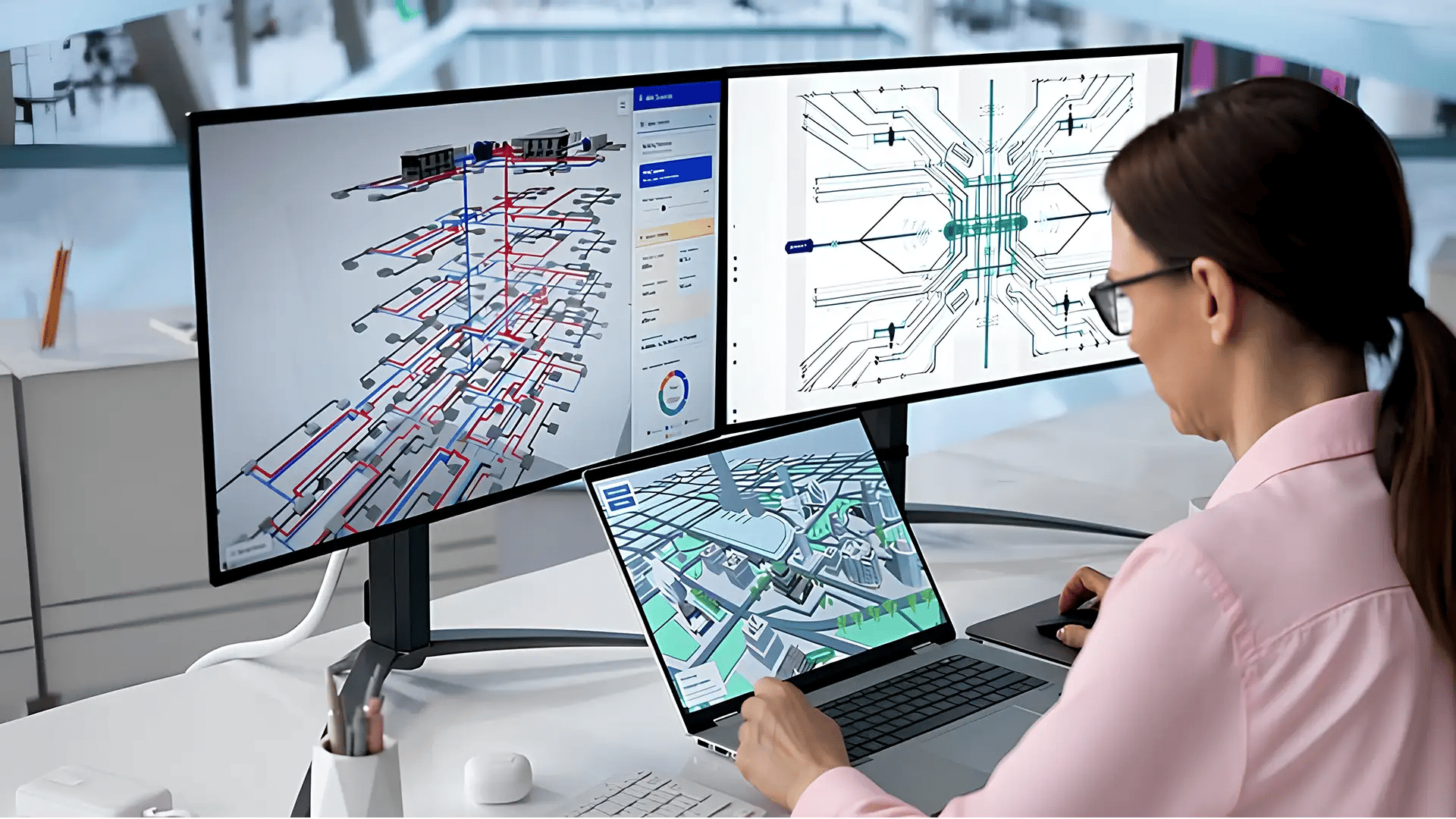
Another area in which partial digital twins can deliver benefits – today – is disaster management. Networks are often confronted with unexpected events. With digital resilience being baked into legislation like DORA and NIS 2, there is mounting pressure on operators to support operational processes with appropriate disaster recovery protocols to meet regulated obligations.
In such situations, we need to know what might be the impact on users in an affected area. We also want to understand how systems behave during the event, what the peak impact might be – and how systems return to normal operations and whether they adhere to established protocols and governance procedures.
The magnitude of such disasters can vary – from localized disruptions due to, for example, seismic events, or even country-wide issues, such as occurred in Spain and Portugal in the spring of 2025.
The impact of this event exposed a harsh light on the procedures operators follow to both manage disasters and to ensure graceful recovery in their aftermath. As a result, operators face growing pressure to model such events and regularly run simulations as they continue to maintain their networks under the gaze of regulatory scrutiny.
For this activity, digital twins – even partial models – provide a useful additional sandbox in which various scenarios can be explored. This is important because this is not a one-time activity, but rather one that needs to be incorporated into general update and management practices.
A third use case – of the many hundreds of possible opportunities – could support modelling of new automation use cases before they are deployed into the network. Because the digital twin offers a virtual environment for experimentation, a specific automation flow could be deployed in the offline network to review its operation under human supervision before it is let loose in the wild.
This enables incremental evaluation of automation innovations in a safe environment – supporting enhanced governance and providing another level of traceability. The verification can be part of the release procedures – so, the twin is, again, not required to be permanently operational but is activated when necessary.