Battery Passport: Challenges & Opportunities in Manufacturing
Discover how camLine MES and SQM solutions help battery manufacturers meet Battery Passport requirements and improve traceability, quality, and compliance

Explore camLine’s smart manufacturing insights from Digitimes Forum, including AI adoption, Agentic AI, and practical strategies for implementation.
Listen to this article
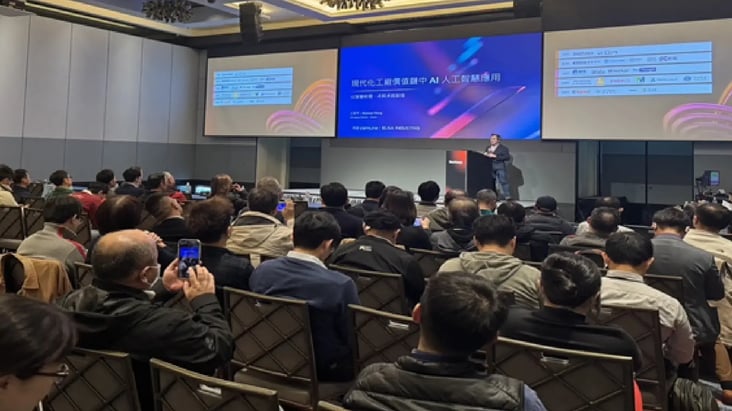
At the Digitimes Forum held on March 11, 2026, in Hsinchu, Taiwan, camLine joined the discussion around Smart Factory 2.0, a theme centered on how manufacturing is moving beyond post-analysis and optimization toward systems that can learn, adapt, and support more proactive action.
The event highlighted three core ideas shaping this direction:
Together, these themes point to a clear evolution in smart manufacturing. Smart factories are no longer defined only by visibility and automation. The next stage is about using AI to support better decisions, greater adaptability, and more connected operations across the factory.
During the event, camLine shared practical insights into how AI is being adopted in smart manufacturing, starting with the operational challenges many manufacturers continue to face. These pain points include:
These challenges are closely linked, and issues in one area often affect performance in another. That is why manufacturers need a more structured approach to digital transformation rather than isolated improvements.
This is also where strong digital foundations become essential, whether in manufacturing operations management, quality and process control, recipe management, or material flow orchestration.
Learn more about how camLine MOM solutions help manufacturers address operational challenges.
A central part of camLine’s presentation was the progression of AI adoption across four phases. The key message was that adoption is not a single leap. It develops over time as manufacturers strengthen their data foundation, operational understanding, and readiness for change.
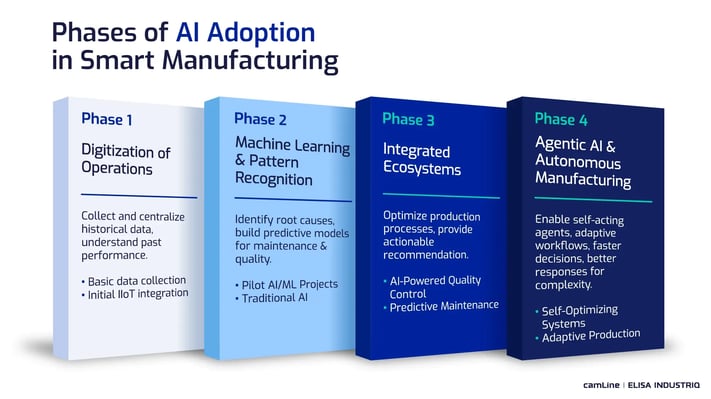
Four phases of AI adoption in manufacturing, from digitizing and analyzing historical data to agentic AI and autonomous operations.
camLine also shared how customer transformation often begins with traditional AI based on analytics and machine learning and progresses toward more advanced Agentic AI. That shift matters because manufacturers increasingly need more than insight alone. They are looking for ways to support faster decisions, more adaptive workflows, and better responses to production complexity.
“AI adoption in manufacturing should be treated as an operational journey, not just a technology initiative.” — Rockson Kiang, Managing Director, camLine Taiwan
One of the closing messages from camLine’s session was a practical strategy for companies adopting AI: think big, start small.
Manufacturers should define a long-term vision for what they want their smart factory to become but begin with smaller projects that allow them to test methods, evaluate value, and learn in a controlled way. This approach helps companies reduce risk while creating a clearer path for future expansion.
Just as important, AI adoption requires a dedicated team that is open to change and willing to optimize workflows and organizational practices where needed. Technology alone is not enough. Progress also depends on people, ownership, and the willingness to improve how work gets done.
“Think big, start small. Build the vision first, then prove the value step by step.” — Rockson Kiang, Managing Director, camLine Taiwan
The Digitimes Forum showed that Smart Manufacturing 2.0 is not only about better analysis, but about building operations that can learn, adapt, and respond more proactively. For manufacturers, that starts with addressing real challenges in supply chain management, process and quality control, recipe management, and advanced material handling.
These were the areas camLine highlighted during the event, together with a practical view of how AI adoption evolves from traditional analytics and machine learning toward more advanced Agentic AI. The key message was clear: manufacturers need a long-term vision, but progress should begin with focused projects that prove value and support wider transformation over time.