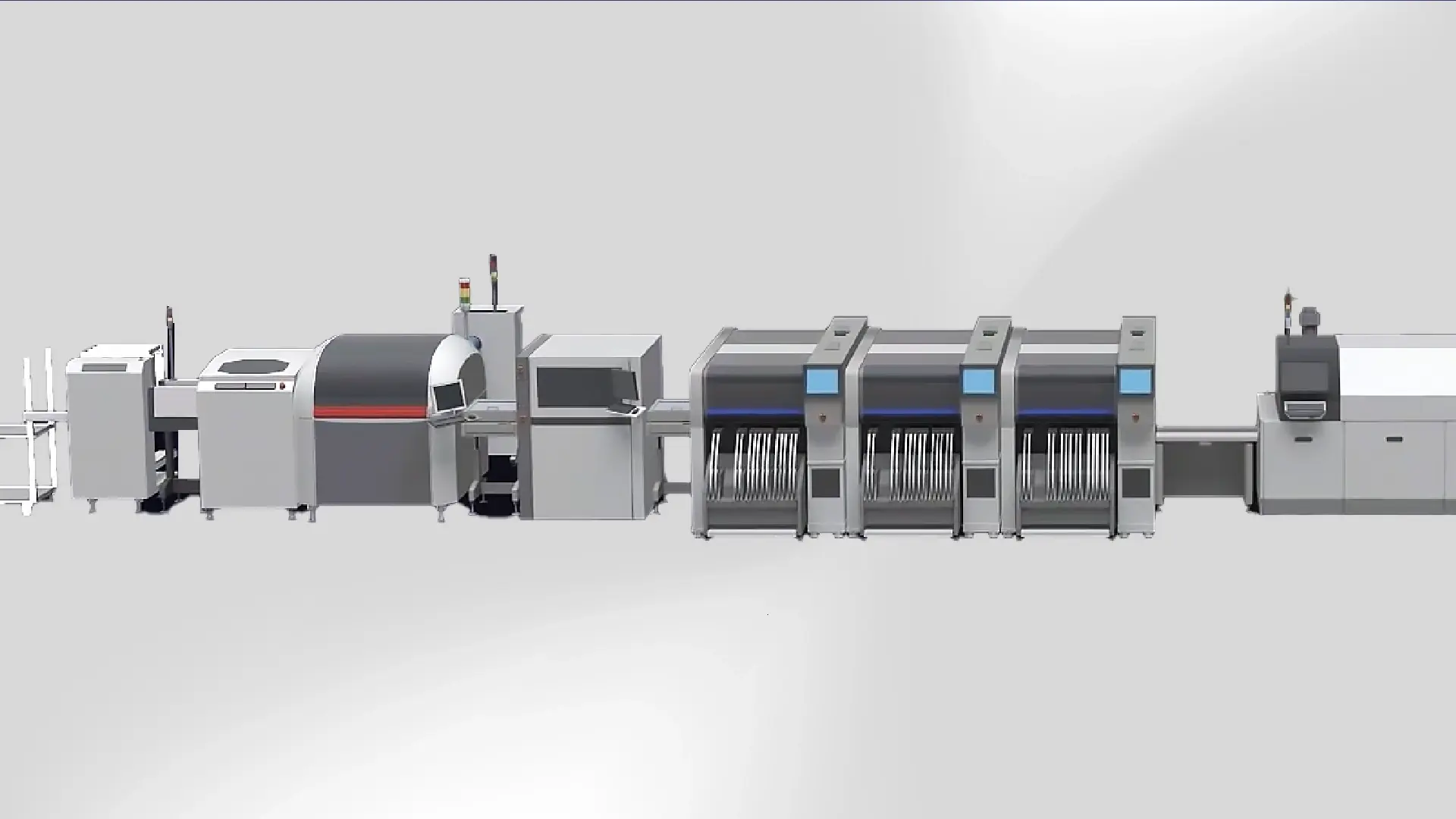
SMT production includes time-sensitive transitions between solder paste application, component placement, inspection, and reflow. A delay at one machine can cause material or partially processed boards to remain between stages longer than the applicable process condition allows.
This Work Smarter video shows how LineWorks MES, a modular MES solution from camLine, monitors elapsed time across connected SMT equipment. It detects deviations from configured timing requirements and initiates the defined response when attention is required.
Why Elapsed-Time Limits Matter in SMT Production
Equipment may complete each individual operation correctly while the time between operations still exceeds the accepted process window.
For example, a delay after solder paste printing may affect whether the printed board remains suitable for the following placement and reflow stages. Equipment downtime or queues can therefore create a process risk even when the delayed machine is not the source of the original material condition.
Line-level process-time monitoring makes these delays visible while production is running.
How LineWorks MES Monitors and Controls Process Time
LineWorks MES uses production events from connected equipment to monitor elapsed time between relevant process stages.
How SMT Process Time Control Works: From Timing Requirement to Response
| Control stage |
What must be established |
| Define the timing requirement |
Establishes the permitted time between the relevant SMT production stages. |
| Monitor elapsed time |
Tracks production as it moves or waits between connected equipment. |
| Detect a violation |
Identifies when the configured timing condition is reached or exceeded. |
| Initiate the configured response |
Notifies responsible users and, where supported, coordinates a hold or equipment stop. |
A timing violation identifies that the configured process condition has not been met. The responsible production or quality team must still review the affected material and determine the appropriate disposition.
Apply the Appropriate Timing Rule to Each Production Context
The acceptable time window may differ according to the material, product, PCB technology, or production stage.
LineWorks MES supports configurable timing parameters so the monitoring rule can reflect the applicable production context. This allows the system to distinguish between processes that require different elapsed-time limits rather than applying one timing condition to every job.
Explore LineWorks Suite
FAQ
Q: Why do elapsed time limits matter in SMT production?
A: Elapsed time limits matter because materials and partially processed printed circuit boards can remain valid only for a defined period between SMT process steps. For example, an excessive delay between solder paste printing, component placement, and reflow can create a quality risk even when each machine operates correctly.
Q: How does LineWorks MES detect a process time deviation?
A: LineWorks MES detects a process time deviation by using recorded process events to calculate the elapsed time for the applicable board, lot, material, or process stage. When the configured time limit is reached or exceeded, the system can notify responsible users and, where supported by the integration design, coordinate a hold or equipment stop. Accurate detection requires synchronized timestamps, complete process events, and the correct production context.
Q: Can process time rules vary by material, product, or SMT process stage?
A: Yes, process time rules can be configured for different materials, products, and SMT process stages. This allows different solder paste types, PCB technologies, products, or route conditions to use the applicable time limit. Governance should define the source of each limit, who may change it, how exceptions are approved, and how elapsed time is treated during planned or unplanned production stops.
Q: What scenarios should be covered when validating SMT process time control?
A: SMT process time validation should confirm that warnings, holds, or other configured actions occur at the correct point under normal and exceptional production conditions. The validation should cover:
- normal production flow;
- production queues;
- planned pauses;
- equipment breakdowns;
- board removal and return;
- rework;
- route changes;
- shift transitions;
- missing process events; and
- timestamp differences between systems.
The manufacturer should also confirm who reviews and releases affected material and how the elapsed time history is retained for quality review.