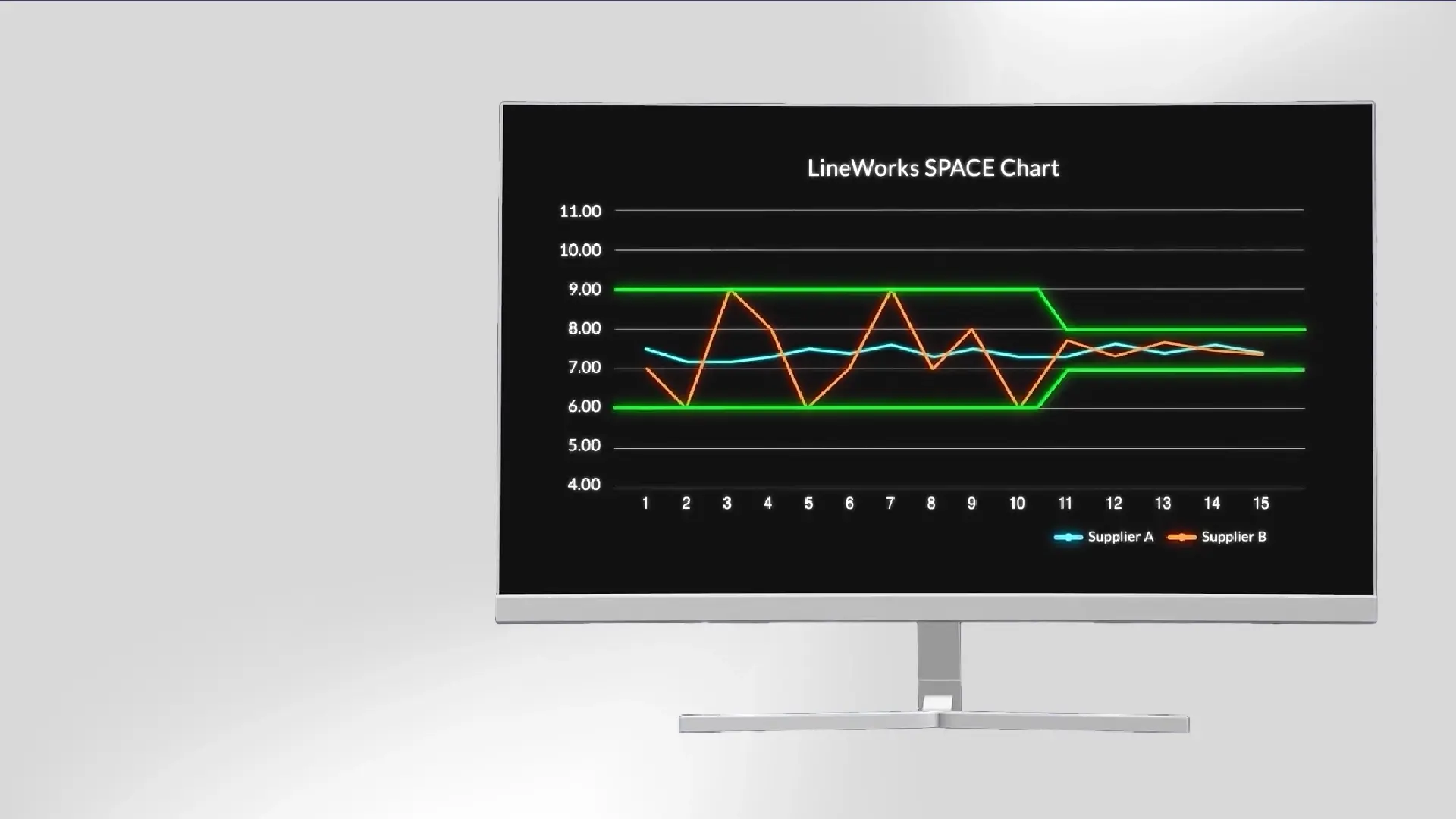
Advanced-materials manufacturers may rely on several suppliers for materials that directly affect process stability and product quality. Each incoming batch can include quality results that must be checked against the applicable specifications before the material enters production.
When supplier information arrives through separate documents or manually handled records, incoming inspection teams must spend additional time entering, comparing, and reviewing the data.
This Work Smarter video shows how LineWorks SQM, a camLine Supplier Quality Management solution, digitizes incoming-material quality control. It uses electronic Certificate of Analysis data to support specification checks, incoming decisions, and supplier-performance analysis.
Why Incoming-Material Quality Is Difficult to Control
Receiving a Certificate of Analysis does not automatically confirm that the supplied material meets the manufacturer’s requirements.
Quality teams must associate the certificate with the correct supplier, material, and batch before comparing each result with the applicable specification. Different units, test methods, document formats, or missing results can make this review more difficult.
When the data is entered manually, the incoming quality workflow can also become slower and more susceptible to transcription or comparison errors.
How LineWorks SQM Supports Incoming Quality Management
LineWorks SQM connects suppliers and manufacturers through electronic quality data. It can receive supplier eCoA results, evaluate them against configured requirements, and retain the data for later analysis.
Four Capabilities for Managing Supplier Quality Data
| Capability |
How it supports incoming quality |
| Supplier eCoA collection |
Receives electronic quality results and associates them with the relevant supplier, material, and batch. |
| Specification evaluation |
Compares incoming quality values with the configured acceptance criteria. |
| Incoming decision support |
Provides results that can support inspection, release, quarantine, or exception handling. |
| Supplier-performance analysis |
Uses SPC, trend analysis, and reporting to review supplier quality over time. |
Automation depends on consistent identifiers, units, test methods, limits, and data exchange between the supplier and manufacturer.
Use Quality History to Improve Supplier Collaboration
Centralized incoming quality data allows teams to review more than one delivery at a time.
Quality engineers can compare results by supplier, material, production site, or period to identify recurring patterns and prepare supplier-performance discussions using a shared data history.
The results still need to be interpreted in context. Production volume, material mix, specification changes, inspection severity, and sample size can affect how supplier trends should be understood.
Explore LineWorks SQM
FAQ
Q: How can manufacturers reduce manual review of incoming material quality?
A: LineWorks SQM can receive supplier quality information, compare it with the applicable specifications, and coordinate the incoming inspection or disposition workflow.
Electronic Certificates of Analysis reduce re-entry when their data can be exchanged reliably. Automation is most useful when material, supplier, batch, units, limits, and test-method identifiers are consistent between the supplier and manufacturer.
Q: How does LineWorks SQM use supplier Certificates of Analysis?
A: LineWorks SQM can capture eCoA results, associate them with the supplied batch and material, and evaluate them against configured acceptance criteria. Results can then support inspection, release, or exception handling.
The project should define how documents and structured data are authenticated, mapped, corrected, approved, and retained, including what happens when a required result is missing or uses a different method or unit.
Q: Can supplier quality data be analyzed over time?
A: Yes. Centralized incoming results can be evaluated with SPC and trend views to compare suppliers, materials, sites, or time periods and support supplier-performance discussions.
A trend is only as reliable as the sampling plan and context behind it. Teams should account for volume, product mix, specification changes, inspection severity, and small sample sizes before ranking suppliers or changing controls.
Q: What decisions and exceptions should an SQM implementation govern?
A: Define who may accept, reject, quarantine, conditionally release, or request additional testing; which results can be evaluated automatically; and which require review.
Test missing eCoAs, out-of-specification values, unit mismatches, duplicate batches, changed suppliers, split deliveries, retest results, and emergency release. The audit trail should show the data, rule, decision, approver, and affected material.