What Is Autonomous Network Operations in Telecom?

The industry is moving beyond monitoring and automation toward automated systems. This shift is referred to as Autonomous Network Operations. Learn more

Table of content

Listen to this article

Autonomous Network Operations in Telecom | Polystar
9:45

Autonomous Operations has become one of the most important strategic objectives for communications service providers (CSPs) and telco industry. With increasingly complex networks, cloud-native architectures, AI-enabled services, and rising customer expectations, operators are discovering that traditional operational models can no longer scale effectively. The industry is moving beyond monitoring and automation toward systems that continuously optimize, adapt, and act with minimal human intervention.

This shift is commonly referred to as Autonomous Network Operations or Autonomous Networks. 

Autonomous Networks: More Than Just Automation

Autonomous operations don’t simply mean more automation. The industry consensus from organizations such as TM Forum, and leading industry players is that autonomy represents a fundamental operating model change and transformation. Industry initiatives such as TM Forum's Autonomous Networks Mission are driving the development of standardized architectures that enable self-healing and self-optimizing networks, helping operators progress toward Level 4 autonomy and beyond while improving agility, efficiency, and customer experience.

Traditional Automation vs. Autonomous Operations

Traditional automation focuses on executing predefined rule-based workflows faster. Humans design the process, determine the sequence of actions, and create rules that machines follow.

Autonomous Operations change this paradigm: Instead of defining every step, operators define the desired outcome, and the system continuously determines how best to achieve it. Rule-based automation remains valuable where processes are well understood and predictable, helping to identify and automate repeatable operational tasks.

Commonly, the autonomous networks framework describes this as a transition from imperative operations to intent-driven and outcome-based model and operations. Rather than telling the network what commands to execute, operators express business or service goals, and autonomous systems continuously observe, analyze, decide, and act to reach and maintain those goals. The result is a network that becomes adaptive, self-optimizing and capable of safe, continuous change.

Autonomous Operations therefore represents a clear progression from:
Unified Data → Operational Intelligence → Automation → Autonomous Operations

This journey starts by building a solid data foundation, technology evolution, validating and revising processes, and evolving the operating model that changes how operations teams interact with the network.
Why the Industry Is Moving Toward Autonomous Networks

Operators are under continuous OPEX pressure, and automation is one of the key levers for improving efficiency and meeting financial targets. However, operators are also facing several powerful technology trends that are pushing them toward autonomous operating models. Networks now span mobile, fixed, transport, cloud, edge, and data center domains. They are multi-vendor, multi-domain, multi-technology, highly distributed, and software-driven. Customer expectations continue to rise, with users demanding seamless, always-on services wherever and whenever they need them.

Traditional operational environments struggle under these conditions because they depend on fragmented tools, siloed operations, disconnected inventories and topologies, multiple sources of truth and labor-intensive troubleshooting processes. Autonomous Operations begin with a trusted and consistent operational data foundation. Only then can AI be effectively embedded into operations to support intelligent decision-making and automation.

AI-Ready Data Is a Must for Autonomous Operations

AI systems require trusted contextual intelligence, real-time visibility and an understanding of service dependencies before they can make reliable decisions.

Learn more about Data readiness for AI in telecom

In short, when Autonomous Operations is done right, it enables safe and reliable network changes, software upgrades, and continuous, scalable operations.

The Foundation: Trusted Data and Operational Intelligence

One of the strongest messages emerging from both industry research and operator experience is that autonomy does not begin with AI. Autonomy begins with trusted operational data and contextual intelligence. Before networks can become autonomous, they need a reliable understanding of real-time context depicting what is happening across all technologies, domains, and services.

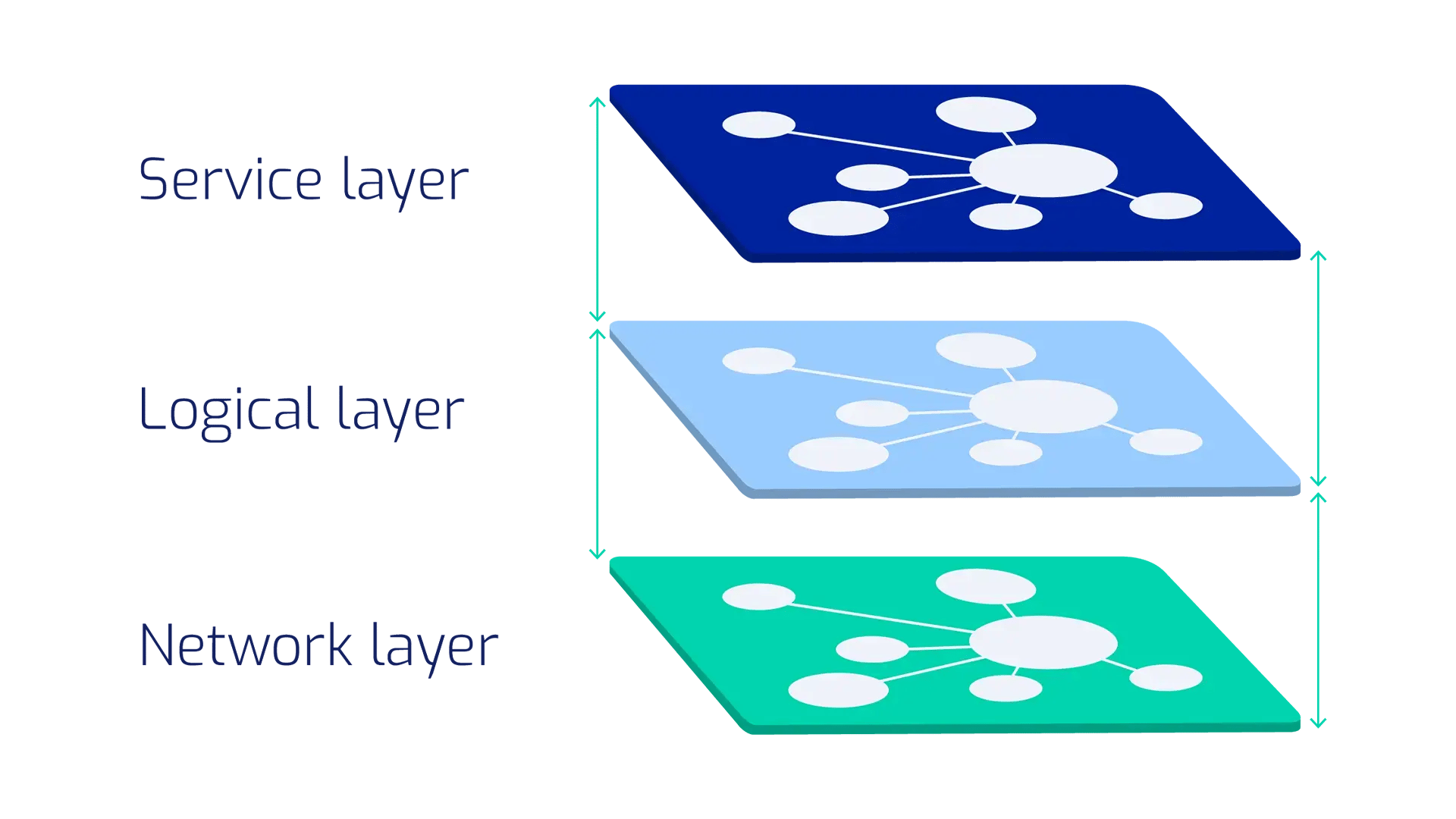
Polystar believes trusted, high-quality and unified data across networks, services, and customers is the foundation for AI-driven Autonomous Operations. Observability data with measurements and events is contextualized with topology, creating a continuously updating operational model that maps network assets, service relationships, dependencies, and their real-time business impact.

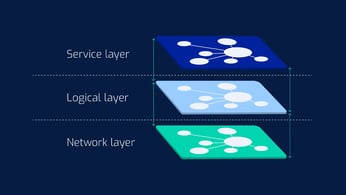
The semantic layer creates a shared understanding of physical network assets, logical connections, services, and dependencies between them, thus providing the context needed for both human operators and AI systems to understand service impact, evaluate changes, and make informed decisions.

Illustration of autonomous operations in telecom that builds on trusted data, AI and automation
Illustration of a Digital Master

Why Topology Matters

Topology is the arrangement and relationships of elements within a system such as how devices are connected in a network.

This trusted operational foundation serves multiple purposes:

  • It provides a single operational truth instead of multiple inventories.

  • It gives AI systems the context required to understand network behavior.

  • It enables the correlation of customer, service, and network impacts.

  • It supports automation, validation and governance across domains.

Without such a foundation, AI becomes just another isolated tool rather than an operational and actionable decision-making system.

Closed Loops: The Heart of Autonomous Operations

The industry broadly agrees that the core mechanism behind Autonomous Network Operations is the controlled and intelligent closed loops. A closed loop, based on trusted data, operational and contextual intelligence, continuously observes the network and services, analyzes conditions, decides what action should be taken, executes the action while considering the desired outcome. The cycle repeats continuously.

Unlike conventional operations where a human interprets alarms, network signals and performs actions manually, autonomous systems automate the entire cycle, with human supervising automation. Examples include software migration and service provisioning, software upgrades, and device configurations.

Polystar's vision similarly centers around connecting assurance with operational intelligence and automation into continuous closed loops that learn and improve over time. The objective is not simply faster operations but self-optimizing networks and operations.

The Role of AI Agents and the Operational Model

It’s obvious AI will play a central role and it’s becoming the reasoning engine of autonomous networks. But AI alone is not delivering autonomous network operations, it requires other building blocks as well. Modern autonomous architecture combines multiple technologies rather than relying solely on large language models. Successful autonomous operations combine trusted AI-ready data, agentic AI, and automation frameworks to deliver connected, intelligent operations.

By using a continuously updated operational model of the network, AI agents can understand relationships and dependencies, predict the impact of proposed actions, and validate decisions before execution. By simulating outcomes and validating policies, it can be ensured that autonomous actions remain safe and predictable.

Contextual knowledge allows AI agents to move beyond data interpretation toward understanding relationships, dependencies, intent, and business impact.

It’s a living operational model that enables impact analysis, root cause analysis, change validation, and automated and autonomous decision support are necessary capabilities in a journey towards full autonomy.

A Polystar illustration visualizing the path toward outcome-based autonomous operations
Two telecom engineers working together

The End Goal: Outcome-Driven Telecom Operations

The ultimate objective of Autonomous Operations is not automation itself. The objective is to continuously deliver business outcomes, service quality and customer experience targets with minimal manual intervention. Human roles evolve from executing operational tasks to designing policies, governing autonomous systems and improving operational models.

Leading industry bodies expect the coming decade to be characterized by autonomous ecosystems, distributed intelligence and AI-native networks. Operators that successfully combine trusted data, operational intelligence, AI and closed-loop automation will be best positioned to manage growing complexity while simultaneously improving efficiency, service quality and agility. Polystar believes operators who will reach this goal first are the ones with the strongest focus in building the trusted operational intelligence layer.

In essence, Autonomous Operations is about creating a trusted, intelligent, and continuously optimizing operating system for the network.

It transforms telecommunications operations from reactive management of incidents into proactive management of outcomes. That is why Autonomous Operations is increasingly viewed not as a technology initiative, but as the future operating model of the telecommunications industry.

Questions & Answers - Autonomous Network Operations


  • Traditional network automation focuses on executing predefined tasks faster and more efficiently. Engineers define the workflows, rules, and actions in advance, and automation follows those instructions whenever specific conditions are met. It is highly effective for repetitive, predictable processes where both the problem and the response are already known.

    Autonomous Operations go a step further. Instead of following fixed rules, autonomous systems are designed around business outcomes and service objectives.

    Operators define the desired result, such as maintaining service quality, minimizing customer impact, or accelerating software upgrades, and the system continuously determines how best to achieve that outcome.

    The key difference is decision-making. Automation executes predefined actions, while Autonomous Operations continuously observe, analyze, decide, and act based on real-time operational conditions.

    By combining trusted data, contextual intelligence, topology, AI, and closed-loop automation, autonomous systems can adapt to changing circumstances, validate actions before execution, and optimize operations with minimal human intervention.


  • AI-ready data provides the context AI needs to make reliable decisions. By combining operational data with network topology, service dependencies, and business context, it enables AI to understand impact, evaluate actions, and support safe and effective autonomous operations. Without trusted and contextualized data, AI cannot operate with confidence.

  • Closed-loop operations are the core execution mechanism behind autonomous networks. They create a continuous cycle of observe, analyze, decide, and act, allowing the network to respond to changing conditions with minimal human intervention.

    Instead of relying on engineers to manually detect issues, investigate root causes, and implement corrective actions, closed loops continuously monitor network and service performance, evaluate the impact on customers and business objectives, and automatically execute the most appropriate response.

  • Topology and operational models provide the context that turns raw network data into operational intelligence. They help operators and AI systems understand how network assets, services, customers, and dependencies are connected, enabling more accurate impact analysis and decision-making.

    By creating a continuously updated view of the network, they support root cause analysis, change validation, and closed-loop automation. Without this contextual understanding, AI and automation cannot reliably deliver autonomous operations.

  • Topology and operational models provide the context that turns raw network data into actionable intelligence. While telemetry, alarms, and performance metrics show what is happening in the network, topology reveals how network assets, services, customers, and dependencies are connected. Together, they create a continuously updated operational view of the network and its business impact.

  • Autonomy starts with trusted data, not AI. Telecom operators should start by creating a trusted, unified operational data foundation that combines network, service, customer, and topology information. This enables operational intelligence, which in turn supports automation and closed-loop operations.

    Once trusted data, operational context, and governance are in place, AI can be introduced to support increasingly autonomous decision-making. In practice, most operators progress through four stages: Unified Data → Operational Intelligence → Automation → Autonomous Operations. 

Would you like to learn how Polystar can automate your telecom operations?
