
Digital Master | Autonomous Network Operations | Polystar
Discover how a Digital Master provides the trusted operational context, real-time intelligence, and data foundation for autonomous networks.

Learn what DataOps is, how it works in telecom networks, and why a purpose-built DataOps platform delivers efficiency, value, and accelerated innovation.

Listen to this article
Telecom networks generate huge volumes of data. DataOps gives operators a structured, streamlined solution that turns data into a dependable resource for AI and automation.
What Is DataOps?
DataOps (data operations) is a set of practices and tools for managing how data moves from its sources to the people and systems that use it. It automates and monitors each stage of the data pipeline, so data arrives clean and ready to use.
Also known as “data ops”, the approach grew out of DevOps. It applies the same idea to data, so pipelines are tested and improved continuously as needs change. It also improves how data flows between the teams that manage it and the teams that use it.
For telecom operators, DataOps requires ingesting network and OSS data from every domain and vendor, then cleaning, transforming, and enriching it in real time. The outcome is a single, governed data foundation for AI/ML models and automation.
Telecom data comes from the RAN, transport, and core, as well as OSS and BSS systems, probes, and third-party sources. Each vendor and network generation formats its data differently. A DataOps layer sits between these sources and the applications that use them.
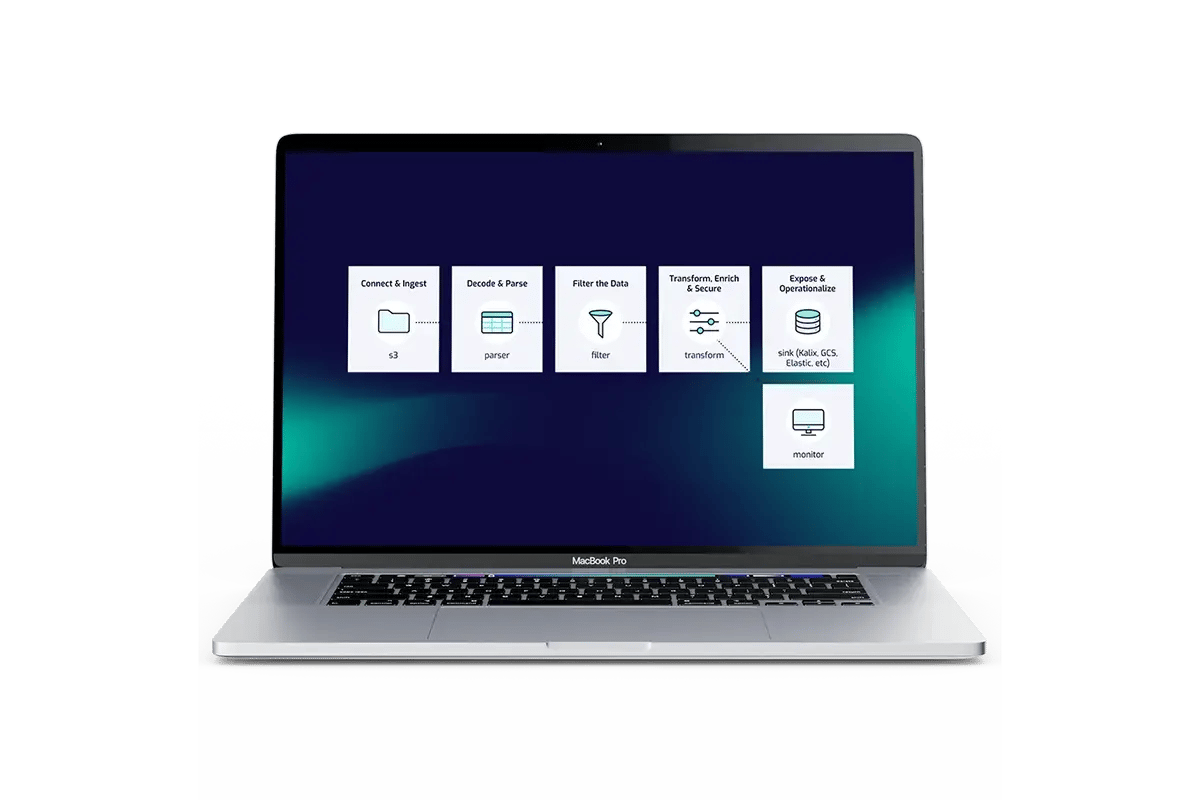
A typical DataOps framework for telecom follows five stages:
Ingestion: Data is collected from any source type, including APIs, streaming feeds, files, and data lakes, through connectors for multi-vendor network and system interfaces.
Transformation and enrichment: Pipelines clean, parse, and normalize the data, then add context such as reference dictionaries. Well-built pipelines adapt to schema changes, for example, when a network upgrade adds new KPIs.
Quality monitoring: Automated checks and anomaly detection flag incomplete or inconsistent data before it reaches the NOC or analytics tools.
Governance and security: Lineage tracking and access controls keep data compliant and protected as it moves through each stage.
Delivery: Analytics-ready datasets are exposed through APIs and standard interfaces to dashboards, data warehouses, and AI/ML platforms.
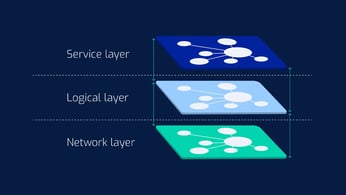
A common approach is to use a single data layer to connect existing silos without replacing legacy systems entirely. For example, cloud-native deployment offers a scalable layer that can grow with traffic across on-premises, cloud, or hybrid environments.
Replacing legacy ETL stacks with real-time pipelines is central to modernizing data processing.

AI and machine learning models depend on a steady supply of well-structured data. DataOps removes fragmented sources and inconsistent formats that often stall AI initiatives, which is why data readiness for AI starts with the data pipeline.
For telecom operators, this enables AI use cases, like predictive maintenance and automated network optimization. These models need performance management data, probe data, alarms, and OSS/BSS logs unified and enriched first, with schemas that adapt automatically when the network changes.
Unifying data domains in real time means that teams can correlate network, service, and customer data to find the root cause of issues sooner. We explore this use case further in our article on accelerating data ingestion with AI.
For network operations centers (NOCs) and operations teams, this shortens time-to-insight when a network issue occurs. Unified, enriched data is what allows assurance use cases such as cross-domain event correlation to trace a problem back to its root cause, even when it starts higher in the network topology.
Data democratization gives teams across the organization access to the same data, so decisions are based on a consistent view.
Network engineering, planning, customer experience, and commercial teams each need a different view of the same data. With a governed data layer in place, each group can work from tailored portals and dashboards, instead of requesting extracts from siloed OSS, BSS, and network platforms.
When each team or system builds its own data pipeline, they often copy and store the same data multiple times. Streamlining these flows into shared pipelines helps avoid this.
It also helps avoid data swamps, where uncontrolled datasets accumulate over many years and become increasingly expensive to run and difficult to use.
Operators often run multiple legacy analytics tools alongside manual processes for each domain. Bringing these into a single, telco DataOps platform reduces complexity and running costs, and frees engineering teams from maintaining one-off integrations.
Audit trails, clear data ownership, and data masking all help operators meet privacy policies and regulatory requirements as data volumes grow.
This is especially important for subscriber data, which often flows from CRM and BSS systems into analytics and AI tools. Anonymization and role-based access let operators share enriched datasets across teams and with third-party applications, while protecting personal identifiers. Read more about how data-driven operations support telco transformation.
A common starting point is a DataOps stack assembled from generic cloud tools or in-house scripts. These stacks need to fulfill specific telco data requirements, such as:
Volume and velocity: Network data arrives in high volumes and many varieties, often in real time
Protocols and formats: Data from sources such as 3GPP TS 32.435 and TS 32.401 XML, SNMP, PM logs, and vendor-specific formats (e.g. Huawei and Nokia) needs dedicated parsers and connectors
Constant change: Network upgrades introduce new KPIs and schemas that can break rigid pipelines
Multi-vendor, multi-generation networks: Data from different vendors and technologies must be normalized before it can be correlated
Building and maintaining this capability in-house often needs ongoing engineering work for each new data source or network change, which may require DataOps services and outsourcing to add capacity. Whichever model an operator chooses, the underlying platform needs native support for telecom data, which is generated in highly specialized standards and vendor-specific formats.
On the other hand, a purpose-built DataOps platform shortens the path from ingestion to analytics-ready output with pre-built telecom integrations, and its pipelines evolve with the network. For operators planning a long-term DataOps strategy, this keeps engineering effort focused on new use cases.
At Polystar, our Kalix DataOps product is designed specifically for telecom data. It introduces a unified data layer that brings network and OSS data together from existing silos and makes it accessible to different user groups.
The platform handles 90 billion events per day and comes with more than 150 connectors and drivers out of the box, supporting telecom-specific standards and vendor formats such as 3GPP TS 32.435 and TS 32.401 XML performance data, Ericsson ENM ASN.1, and Huawei and Nokia vendor formats, alongside protocols such as SNMP.
It also forms the foundation of our Data Assurance solution, giving operators a single source of truth for network and OSS data that is continuously monitored for quality.