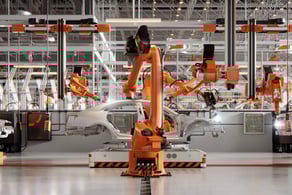
MES – Manufacturing Execution System

The MES sedApta integrates planning and execution, eliminates Excel spreadsheets from the shop floor, and consolidates all production KPIs into a single dashboard. Ready to integrate with ERP, PLC, and SCADA systems in your existing infrastructure.

Manufacturing Execution System (MES): The Digital Backbone of Manufacturing

A Manufacturing Execution System (MES) is the digital heart of modern manufacturing. It integrates planning and execution, providing transparency, traceability, and real-time control over every stage of the production process: from the work order to the finished product. With the sedApta solution, MES becomes a strategic tool for transforming the factory into a smart, connected operation.

What is an MES and how does it work


MES bridges the gap between ERP (Enterprise Resource Planning) and line control systems (PLC, SCADA), integrating people, machines, and processes. It automates the collection of production data, processes it, and presents it as actionable insights to help operators and managers make quick and accurate decisions.

Four measurable benefits, defined as business outcomes rather than technical features


OEE measurable from day one

MES collects data from machines and operators in real time and automatically calculates availability, performance, and quality. Stop guessing: see where you're losing productivity. 
Full traceability, paperless

Every batch, every component, every stage of the process: digitally tracked from raw materials to the finished product. Ready for audits, recalls, and regulatory compliance. 

No gap between planning and execution

MES synchronizes with Factory Scheduling and the ERP system: work orders arrive already prioritized, and schedule changes are propagated in real time. 

Seamless integration with your stack

Preconfigured connectors for leading ERP systems (SAP, Microsoft, Oracle) and OPC-UA and MQTT protocols for PLCs and SCADA systems. Shorter go-live times, fewer customizations. 

Key Features

Six operational capabilities. Each bullet point answers the question: 'What exactly does the software do in the factory?'

    • Real-time execution of work orders: operators receive digital instructions on a terminal or panel PC, with paperless, step-by-step progress tracking.
    • Automatic machine data collection: direct integration with PLCs, SCADA systems, and IIoT sensors to capture cycle times, downtime, scrap, and process parameters without manual input.
    • In-line quality control: checks are integrated into the production flow, not performed downstream. If a parameter falls outside the specified range, the system halts the process and generates a non-conformity.
    • Bidirectional traceability of batches and components: complete history for every order. In the event of a recall, identifying the affected batch takes seconds, not hours.
    • KPI dashboard for operators and managers: views tailored to each role. The plant manager views OEE, MTTR, and rework rate by line. The operator can view their instructions and the order status.
    • Synchronization with Factory Scheduling and Supply Chain Planning: changes in demand or unexpected machine downtime automatically reschedule the production queue in the O.S.A. suite.

Choose the right MES. Transform your manufacturing.

MES

How to choose the right solution to improve visibility, control, and operational performance.

Download the white paper

Benefits


Operational efficiency

reduction of bottlenecks, downtime, and rework

Quality and Compliance

Continuous monitoring and comprehensive documentation for regulated sectors

Cost reduction

optimized resource management and reduced waste

End-to-end visibility

real-time data on progress, costs, and performance

Agility

ability to adapt to changes in demand and priorities

MES in various sectors

Food & Beverage

Recipe management, batch traceability, allergens, and compliance with food safety regulations. 

Automotive

Control of complex assembly lines, component monitoring, recalls, and compliance with industry standards. 

Pharma

GMP compliance, batch traceability and genealogy, electronic records, and real-time quality control. 


Technologies that enhance MES

The future of MES lies in smart factories: factories interconnected through IIoT, the cloud, and artificial intelligence. These technologies enable:

  • Automate processes and customize production on a large scale
  • Predict and prevent failures with predictive maintenance
  • Reduce waste and downtime through machine learning
  • Simulate processes with virtual reality (VR)
  • Guide operators and maintenance personnel with augmented reality (AR)

The result is a more agile, connected, and competitive factory. 


Conclusion

A Manufacturing Execution System is more than just software: it is the enabler of the smart factory. With real-time data, integrated KPIs, and advanced technologies, the MES solution from sedApta and Elisa Industriq Italy makes production transparent, efficient, and ready to meet the challenges of Industry 4.0.

Discover more


Related products


FAQ


  • The MES collects data from machines and operators in real time and automatically calculates the three OEE components - Availability, Performance, and Quality - with no manual end-of-shift reporting needed. 

  • It's the complete history for every order, letting you trace both upstream (raw materials and components used) and downstream (where the products ended up). In the event of a recall, identifying the affected batch takes seconds, not hours. 

  • Work orders arrive in the MES already prioritized by Factory Scheduling, and plan changes propagate in real time: when demand shifts or a machine stops, operators see the new priorities on their terminal right away. 

  • The MES has preconfigured connectors for SAP, Microsoft, and Oracle on the ERP side, and OPC-UA and MQTT protocols to talk to PLCs and SCADA at the machine level: native integration with the stack you already have, for shorter go-live times. 

  • In Food & Beverage it handles recipe management, batch traceability, allergens, and food compliance; in Automotive it follows assembly lines, component monitoring, and recalls to industry standards; in Pharma it delivers GMP compliance, traceable genealogy, electronic records, and real-time quality control. 

  • ERP handles company-wide planning - orders, finance, supply chain - while PLCs and SCADA control the machines on the floor. The MES sits in between, bridging the gap and governing operational execution in the factory, integrating both levels. 

  • Your operators receive digital work instructions directly on a terminal or panel PC, with progress tracked step by step: no more paper, and no more gaps between what happens on the floor and what the system shows. 

  • Quality checks are built directly into the production flow, not performed downstream: if a parameter falls out of specification, the system stops the process before the defect propagates to the next steps.

  • The MES integrates IIoT, cloud, and predictive models to anticipate and prevent failures before they happen, and reduce scrap and downtime through machine learning. It also supports virtual and augmented reality for training and on-the-line operator support. 

  • Predictive maintenance uses machine data to anticipate failures and schedule intervention before downtime occurs; machine learning applied to quality analyzes process parameters to identify the conditions that generate scrap and correct them in real time. 

  • The ERP system manages enterprise-wide planning (orders, finance, supply chain), while the MES controls operational execution on the factory floor, integrating with machines and operators.

  • No. Modern solutions are scalable and customizable, suitable for both small and medium-sized businesses and multinational corporations.

  • By monitoring processes and controls in real time, it reduces errors, waste, and rework costs, ensuring compliance even in regulated industries.

  • Key point: The MES integrates upward with ERP and downward with PLCs and SCADA, creating an interconnected digital factory.

  • Yes. New technologies (cloud, AI, IIoT) make it possible to transition from mass production to mass customization without sacrificing efficiency.

About Manufacturing Operations Management

Optimization of scheduling and production processes

The sedApta Suite for MOM (Manufacturing Operations Management) enables real-time coordination of machines, software, and people to implement new process methodologies based on knowledge sharing and the ability to track results and obstacles in real time, along with all relevant KPIs.