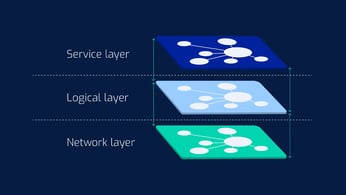

Digital Master | Autonomous Network Operations | Polystar
Discover how a Digital Master provides the trusted operational context, real-time intelligence, and data foundation for autonomous networks.

Discover how telecom operators use Kalix Analytics, redial detection, and speed test data to improve customer experience and network assurance in telecom.

Listen to this article
Part 3 of our Use Case Gallery series.
Collaboration between our partners and our Professional Service teams unlocks imaginative use cases that deliver optimized and specific views – that answer very targeted questions. The ability to extend Kalix Analytics with novel ideas brings new value and helps deliver customer experiences and service assurance that’s tuned to your offers and packages.
Sometimes, a problem is hiding in plain sight. The issue is that you don’t necessarily know that you need to look for it. As we continue to explore innovative use cases, on which our Professional Services team has worked with your peers to deliver specific capabilities, let’s turn to a couple of common issues that cause customers to complain – but, with a bit of thought can be solved.
We’ll start with something so fundamental that it is probably taken for granted: redial attempts.
We all know the problem. We try to make a call (and actual call, that is, using the native mobile dialer) and…nothing happens.
So, we redial and try again. Very possibly, again too.
This is hardly a new phenomenon. In fact, since all you could really do with a mobile network back in the early days of 2G (and before) was to make a call (think how much stress the ability to send texts through Mobile Originated SMS alleviated…), this could be said to be a foundational mobile problem.
And, it’s one that’s been well studied. Take this, for example – a paper from 2007, discussing redial attempts in the context of cellular network issues and that tricky subjective issue of human behavior. Here’s another.
Fascinating stuff, to be sure – and, basically, users will attempt a variable number of redials, depending on their tolerance – but network factors may impede these attempts. And that’s where we have a neat intersection between user satisfaction and customer experience, and network service quality.
Put simply, people may put up with this – but they may also reach a threshold where their tolerance breaks. And then – well, they may kick up a storm, particularly if these issues recur in certain places they habitually visit. In today’s environment, that storm can be seen across all social media fronts and cause significant negative publicity for the operator.
So, what seems like a trivial issue that many people may simply tolerate, as well as one that you might think lies more in the legacy world, as users have now embraced multiple different channels, actually has quite a profound significance. The fact is, people still use mobile voice and expect it to work, even if they do take it for granted.
It’s worth emphasizing this fact. Yes, landline calls have declined but mobile voice continues to grow – and operators continue to dominate this space, despite the rise of alternative channels. So, mobile voice and consistent service experience matter – and will likely remain of crucial importance for many years to come.
But while redial attempts are an irritant for mobile subscribers, they may also be indicative of problems resident in the network, and which need to be resolved before they either escalate or more users are affected.
In this context, one of our partners decided it needed to do more than react to issues. Instead, it sought to extend Kalix Analytics and build new queries and filter criteria that would identify redial attempts.
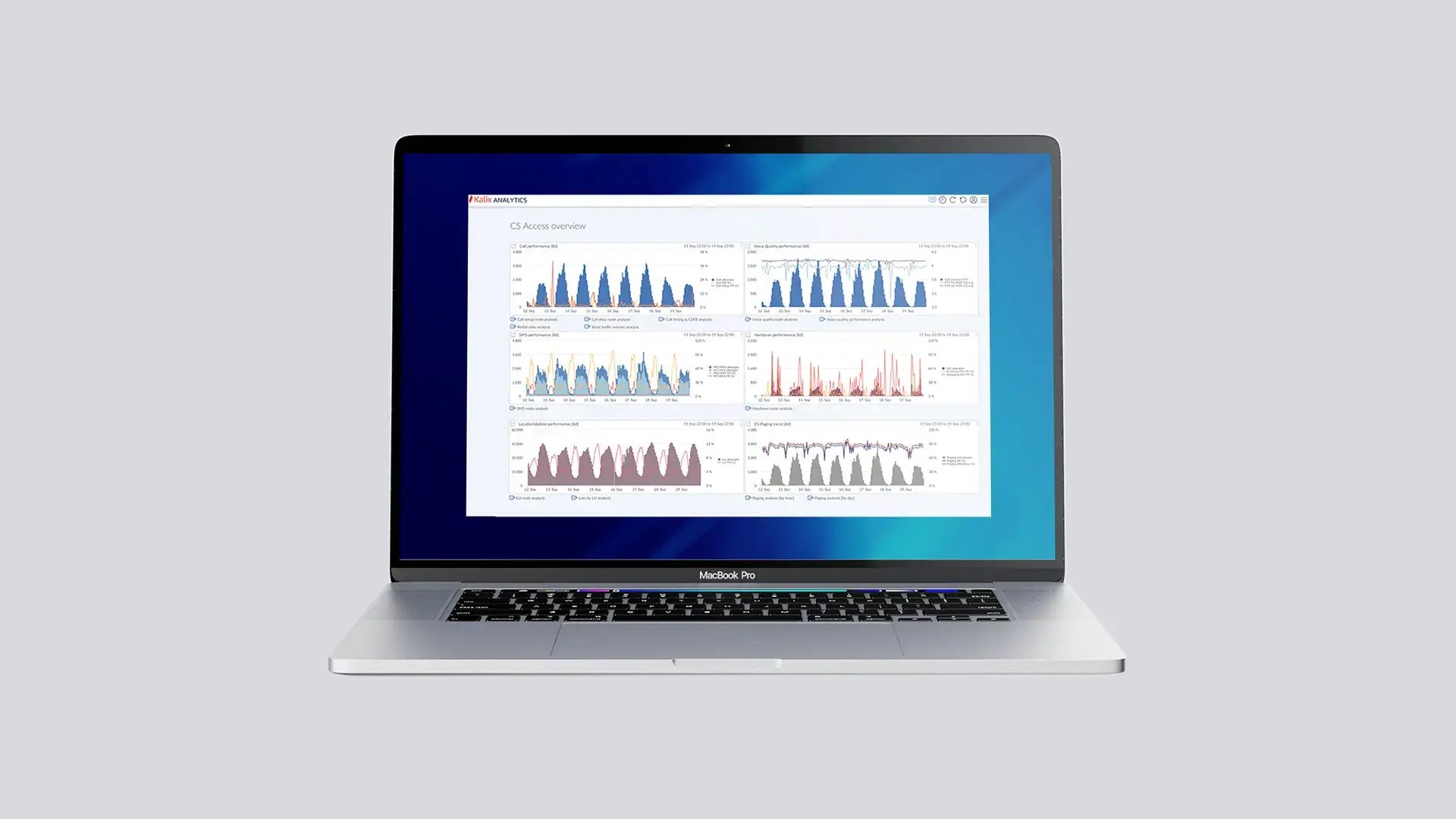
As a result, redial attempts are highlighted in the dashboard, together with network locations and cell sites. With benchmarks, any location that shows unusual deviations from the norm can be prioritized for troubleshooting – guiding the team to proactively explore this common and well-known phenomenon.
Armed with the data, their team can explore the situation and investigate the cause – handling both the individual customer experiences as well as addressing network service assurance issues to sustain quality and performance.
So, micro-issues that people take for granted – or signs of a larger problem? Only the data can reveal the answer. And, with some thoughtful interaction with Polystar Professional Services, the team is now equipped to investigate.

Another common issue is perceived speed and performance. Users expect data sessions to deliver a smooth experience. And, of course, expectations regarding performance have grown with every new generation of mobile and broadband technology. What was trivial 10 years ago can be a major problem today.
It’s also a problem that will likely get worse when we introduce the next round of upgrades or packaged offers. Offer users something that’s apparently better and, guess what? They will, unsurprisingly, expect it to be better.
Speed, then, as perceived by the user matters. A lot. So, when users complain that they are not getting the download (or upload) speeds they expect, they probably have legitimate cause.
But there’s a difference between what users may perceive as the speed they get and the network conditions that you maintain and manage. And this matters, regardless of the kind of connection being used – mobile, Wi-Fi, fiber or DSL,
Service providers can use network analytics information to check upload and download performance – tracking KPIs like jitter, latency and more, as well as user and control plane information from different sources. But there can be other factors at play that may be less visible.
For situations in which users suffer what they perceive to be performance issues, they may unilaterally run a speed test on their devices. This gives them information they trust. At the same time, service providers may use similar tests to troubleshoot when users report issues.
So, speed test data provides a valuable complement to network analytics data. And, given that providers of these services, such as Ookla offer a range of APIs, it’s also possible to integrate both aggregated, location specific data as well as individual user data to provide an enriched view.
Better still: integrate this data directly with Kalix Analytics portals, so that it’s visible in the same place as the analytics data. We’ve discussed the idea of integrating and combining extended data sets in previous posts. Speed test data is one such source – so, once again, our Professional Services team collaborated with another partner to deliver this integration and to make such data available in Kalix Analytics portals.
The speed test data came from the publicly available Ookla APIs, which offer a range of options that support service providers in both troubleshooting as well a competitive benchmarking.
But, by bringing relevant data into Kalix Analytics through our DataOps enabled ingestion and integration capabilities, Kalix users can obtain the enriched picture they need to really drill down into user experience and support enhanced network service assurance – with a clear customer focus.
Other providers are, of course, available but this collaboration illustrates one approach that combines real-world, objective data with equally real-world customer experiences to enhance your ability to manage performance and to resolve issues. It boosts customer service and accelerates resolution.

These examples illustrate how service providers can unlock new insights and enhanced views of issues that can lead to serious user frustration. The data to resolve these problems exists – but may not be accessible in a single pane of glass.
But by defining specific queries and by integrating external data sources, we can realize new approaches to network service assurance and customer experience management. And, by exploring these kinds of original requests, our team can use your innovations and ideas to make life just a bit easier for everybody.
Jonas Nahlin is Director of Professional Services at Polystar. Together with his team of highly skilled telecom engineers, data analysts, and solution architects, he works closely with customers to transform data into actionable insights that improve service assurance, customer experience, and operational efficiency.
Read the first and second articles in the series:
Innovating in Service Assurance and Customer Experience Management through New Use Case Scenarios
Exploring Telecom Use Cases to Enhance Security and Protect Your Customers from Fraud
In the next article, we'll explore innovative use cases to enhance network resilience.