Agentic AI for Autonomous Telecom Networks | White Paper
Learn how a governed semantic layer can help telecom operators scale agentic AI for service assurance and advance toward autonomous operations.

Explore the TM Forum autonomous network levels and how Polystar helps telecom operators build the trusted context needed to progress toward Level 4.

Listen to this article
Autonomous networks are rapidly moving from a long-term industry vision to a practical priority for telecom operators. As networks become more complex, distributed, and software-driven, traditional operational models based on manual processes and isolated automation are becoming increasingly difficult to scale.
The TM Forum autonomous networks levels provide operators with a common framework for understanding where they are on this journey and what needs to change as they progress toward higher levels of autonomy. TM Forum describes six maturity levels, from Level 0 manual operations to Level 5 full autonomy. Importantly, autonomous network levels are assessed within a defined scope, such as a specific operational scenario, workflow, or network domain. Achieving a particular autonomy level in one area does not automatically imply the same level of autonomy across an operator's entire network.
So, what do the different autonomous networks levels mean, and where can Polystar help?
The TM Forum framework describes a progression in which responsibility gradually shifts from people toward increasingly autonomous systems.
Operations are performed manually. People collect information, analyze situations, make decisions, and execute actions.
Systems begin assisting people with individual operational activities, but humans remain responsible for the process.
Automation takes responsibility for more operational activities and predefined processes, while people remain central to decision-making and management.
The network can automate more complex operational processes in defined contexts. Machines assist with decision-making, but operations still rely on human oversight.
This represents a significant transition. TM Forum describes Level 4 as introducing intent-driven decision-making, predictive analysis, and closed-loop management of service-driven and customer-experience-driven networks using AI modelling and continuous learning.
This is the destination of the maturity model: fully autonomous operations.
In practice, however, the industry's immediate emphasis is very much on Level 4 and beyond. TM Forum's Autonomous Networks Mission explicitly aims to help providers reach Level 4 and higher.
This distinction matters. The journey through the autonomous networks levels is not simply about automating more individual tasks. Higher autonomy changes how operational decisions are made.
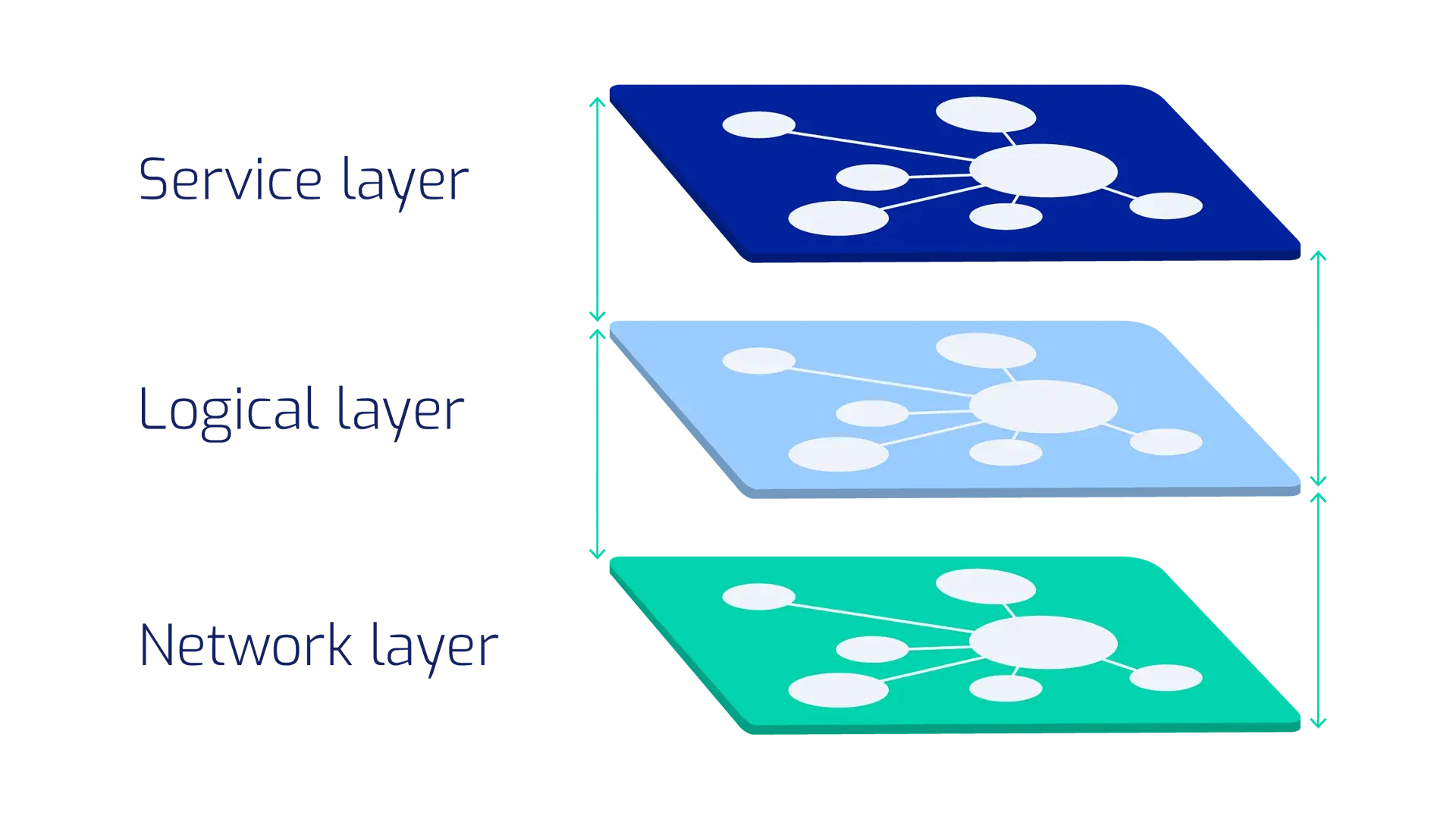
Digital Master is therefore not the end goal. It is the foundation on which increasingly autonomous operations can be built.
Polystar's Autonomous Network Operations vision brings together this trusted operational foundation with operational intelligence, AI and closed-loop automation. A closed loop continuously observes network and service conditions, analyzes them, determines an action, executes it, and validates whether the intended outcome has been achieved.
For example, the Digital Master can provide real-time topology showing where a problem has occurred, dependency information identifying which services could be affected, and telemetry and assurance data describing the operational state. This context can then support analysis, action and subsequent validation of the outcome.
That is an important architectural step for operators pursuing autonomous network Level 4.
It would be misleading to say that purchasing a software platform automatically makes an operator "Level 4." The TM Forum framework evaluates autonomous capability in a particular operational context, and reaching a given level depends on the broader operational environment, processes, and use case.
A more useful question is therefore:
This is where Polystar's portfolio can contribute.
Digital Master provides the continuously updated operational model and trusted context. Observability and assurance capabilities provide insight into network and service conditions. Automation provides the ability to act. Agentic AI capabilities can use the operational context to support increasingly intelligent decision-making. Together, these capabilities create the foundation for developing closed-loop, outcome-driven operations.
Crucially, this does not require operators to jump directly from today's operations to complete autonomy. The Digital Master approach allows autonomous capabilities to be introduced incrementally, with multiple operational use cases reusing the same underlying data, topology and operational context.

The TM Forum autonomous networks levels are useful because they give the industry a common way of discussing progress. But the objective should not be achieving a level simply for its own sake.
For operators building autonomous networks in telecom, the real objective is to create an operating model capable of continuously delivering network, service and customer outcomes with progressively less manual intervention.
Reaching that destination requires more than adding AI to today's operational environment. It requires trusted data, operational context, intelligence, automation, and controlled closed loops working together.
That is the role Polystar sees for Digital Master and Autonomous Network Operations: providing the operational foundation upon which telecom operators can make the transition from assisted operations, through automation, toward increasingly autonomous, outcome-driven operations.